
The Great Wildebeest Migration is an annual movement of wildebeest, zebras, gazelles, and other grazing animals across the Serengeti-Mara ecosystem in East Africa. Unlike what many people imagine, the migration is not a single event happening on one day. It is a continuous circular journey that unfolds throughout the year as animals search for fresh grass and reliable water sources. The movement is guided by rainfall patterns, environmental signals, and survival instincts that have shaped these ecosystems for thousands of years.
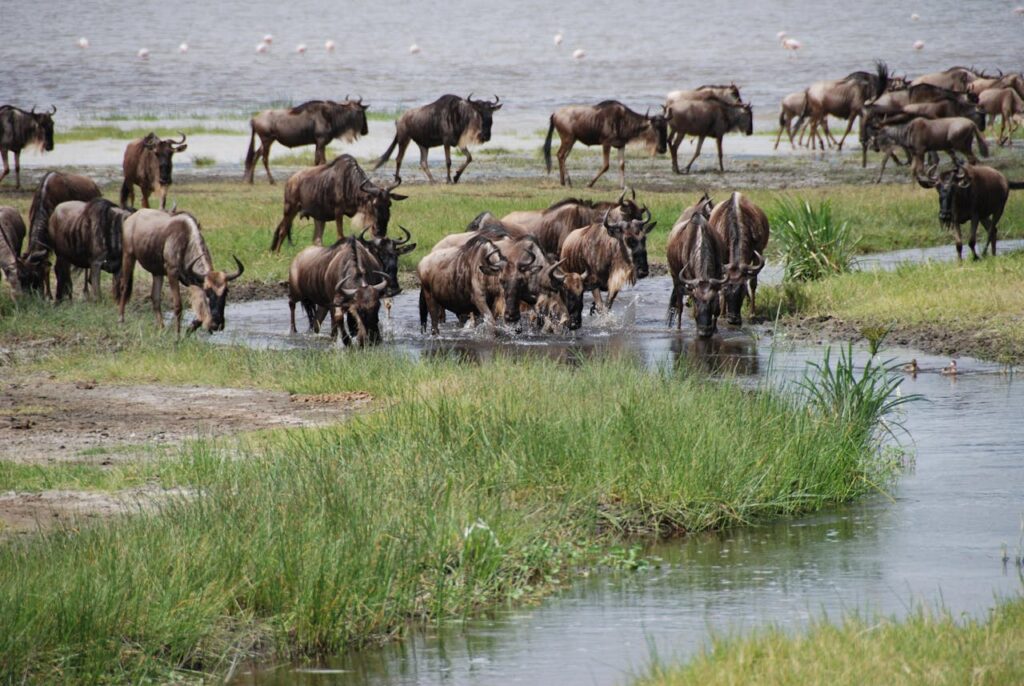
Scientists and safari experts estimate that roughly 1.3 to 1.5 million wildebeest participate in the migration alongside hundreds of thousands of zebras and gazelles. Some newer satellite-based studies using artificial intelligence suggest the actual numbers may be lower than traditional aerial counts, but the migration remains one of the world’s greatest wildlife spectacles regardless of the final estimate.
Why the Migration Happens
At its core, the migration is driven by one thing: survival. Wildebeest constantly chase nutrient-rich grass that grows after seasonal rains. The animals can detect rainfall and fresh grazing from surprisingly long distances, allowing them to adapt quickly to changing environmental conditions.
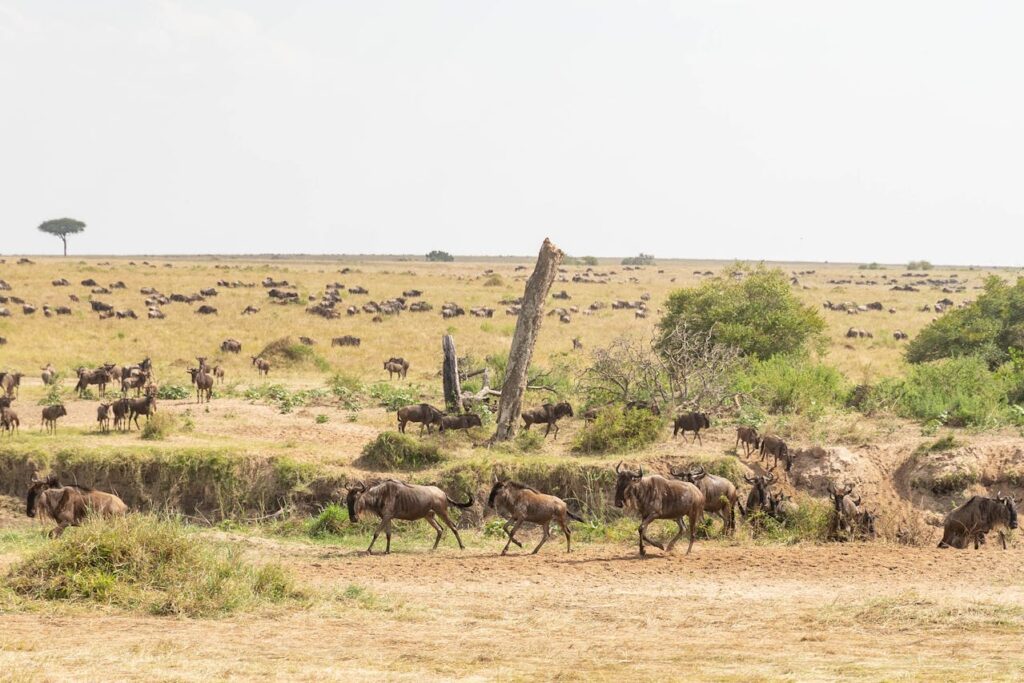
Fresh grass is especially important because wildebeest need high-quality nutrients for reproduction and milk production. During calving season, mothers require strong grazing grounds to feed newborn calves. If the rains fail or grazing becomes scarce, the herds must continue moving.
Click here to see Meektrails Safaris wildebeest migration packages.
Where Does the Migration Take Place?
The migration occurs across the greater Serengeti-Mara ecosystem, a wildlife region spanning northern Tanzania and southern Kenya. This ecosystem contains some of Africa’s most famous safari destinations and remains one of the few places on Earth where large-scale wildlife movement still survives relatively undisturbed.
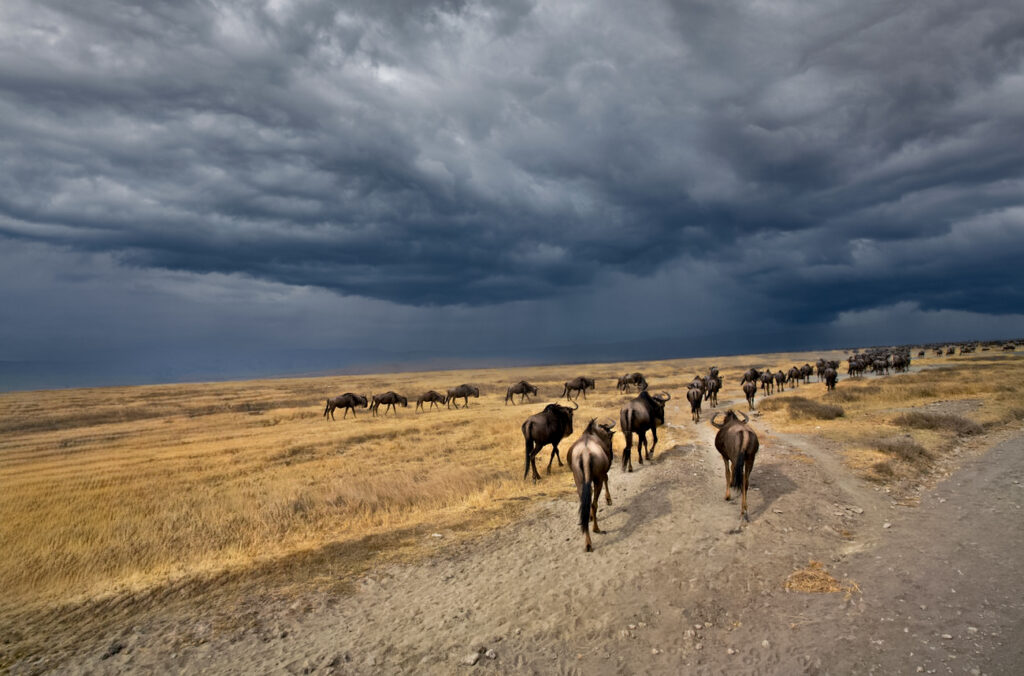
1. Serengeti Ecosystem in Tanzania
Serengeti National Park is the beating heart of the migration. Covering nearly 15,000 square kilometers, the Serengeti features grasslands, acacia woodlands, rivers, rocky kopjes, and seasonal plains. The southern Serengeti becomes especially important during calving season because its volcanic soil creates nutrient-rich grass perfect for newborn animals.
The Serengeti is not static. Different regions become active at different times of year. Southern Serengeti dominates from January to March, the western corridor becomes busy around May and June, while northern Serengeti shines during the dramatic river-crossing season.
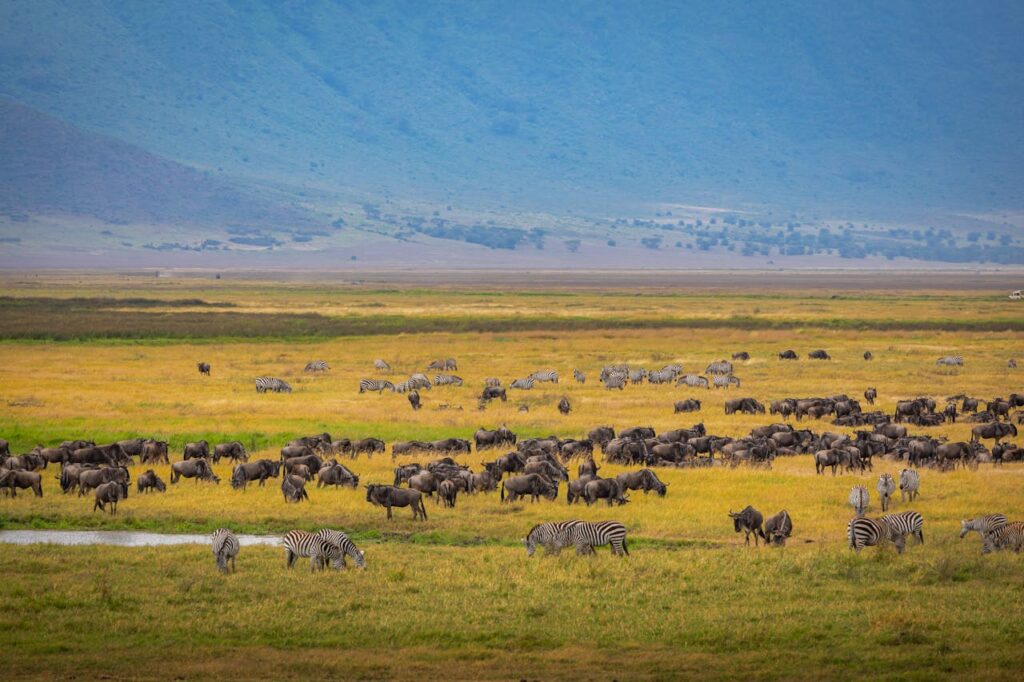
2. Masai Mara in Kenya
The Masai Mara National Reserve forms the northern extension of the migration ecosystem. Mara is smaller than the Serengeti but incredibly rich in wildlife density. Between July and October, herds pour into the reserve searching for greener grass after seasonal rains.
The Mara is famous for photography and predator encounters. Visitors often witness lions stalking migrating herds or crocodiles waiting at crossing points along the Mara River. The reserve also offers cultural experiences connected to the Maasai people, whose traditional way of life remains closely tied to the land.
The Annual Migration Cycle
The migration follows a roughly circular route throughout the year, although exact timings shift depending on rainfall patterns.
| Period | Main Location | Key Event |
|---|---|---|
| January – March | Southern Serengeti & Ndutu | Calving season |
| April – June | Central & Western Serengeti | Herd movement north |
| July – October | Northern Serengeti & Maasai Mara | Mara River crossings |
| November – December | Eastern & Southern Serengeti | Return south |
January to March: Calving Season
The calving season is one of the most emotional phases of the migration. Around half a million calves are born within a short period across the southern Serengeti and Ndutu plains. Some reports suggest thousands of calves can be born in a single day during peak periods.
This synchronized birthing strategy helps overwhelm predators. Even though lions, hyenas, and cheetahs hunt newborn calves aggressively, the sheer number of births increases the chances of survival for the species overall. Watching a newborn wildebeest stand up minutes after birth feels like witnessing evolution in action.
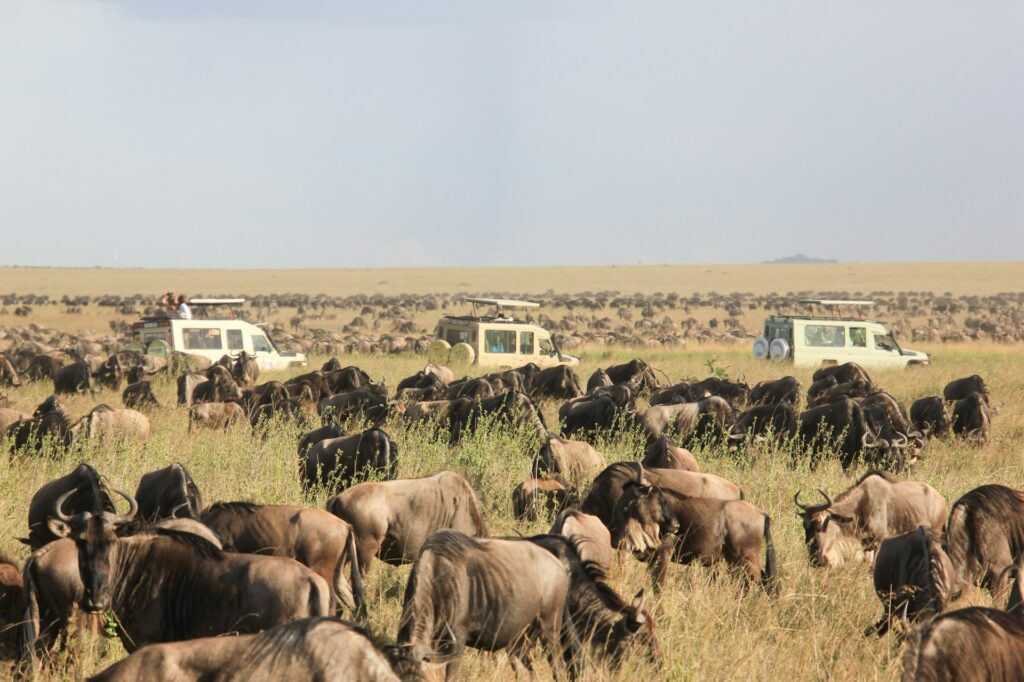
April to June: Movement Toward the Western Corridor
As the rains begin to fade in the south, the herds gradually move northwest toward the western corridor and the Grumeti region. Long columns of wildebeest stretch across the plains, creating dramatic landscapes visible even from aircraft.
Predator activity increases significantly during this stage. Lions follow the moving herds closely, while crocodiles wait at river crossings such as the Grumeti River. The migration becomes less concentrated than during calving season, but the sheer scale remains astonishing.
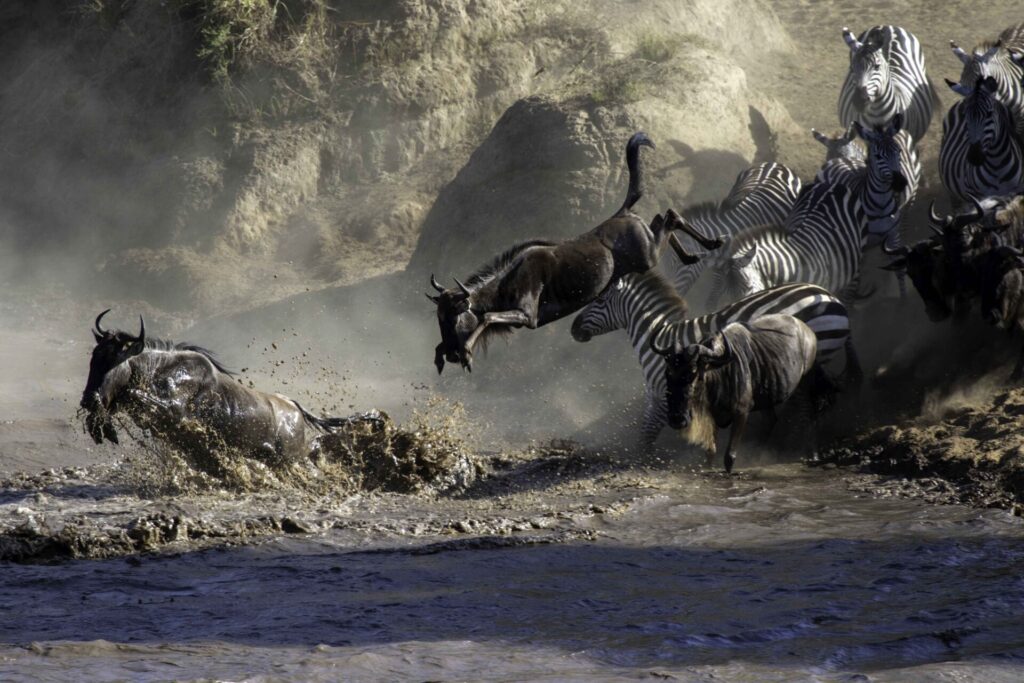
July to October: Mara River Crossings
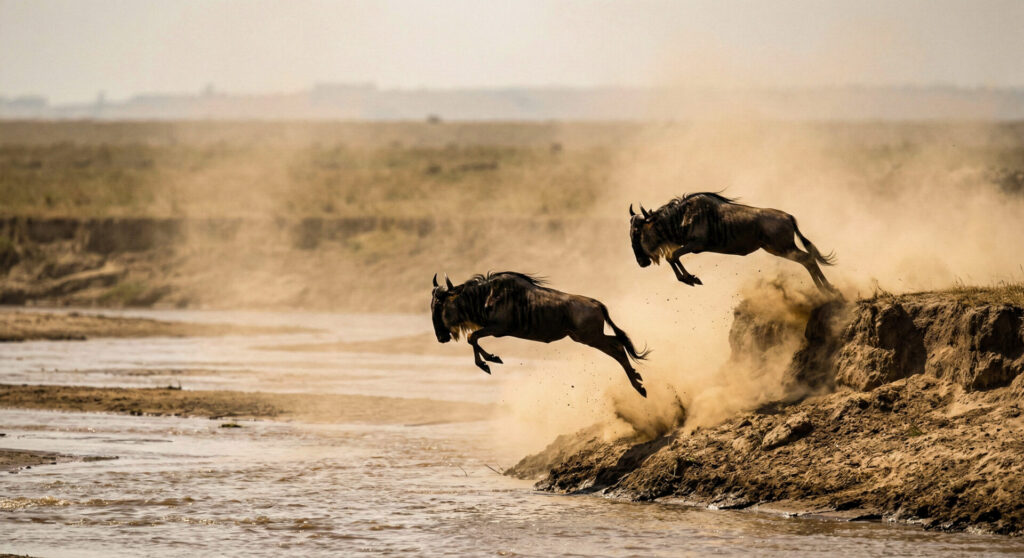
This is the most sought-after phase. Thousands of wildebeest gather nervously along the Mara River before suddenly plunging into crocodile-filled waters. Dust, panic, confusion, and instinct collide in one unforgettable moment.
The crossings are unpredictable. Herds may wait for hours or days before jumping. Sometimes a single brave wildebeest triggers thousands to follow. Safari guides often compare the experience to witnessing controlled chaos shaped by survival itself.
November to December: Return to Southern Serengeti
Short rains pull the herds southward again. Animals gradually leave Kenya and return toward Tanzania’s southern plains. The cycle resets itself naturally, preparing once again for calving season.
This phase offers quieter safari experiences because crowds thin out, yet wildlife viewing remains exceptional. Landscapes become greener, and predator encounters are more frequent.
FAQs
1. What is the Great Wildebeest Migration?
The Great Wildebeest Migration is the annual movement of wildebeest, zebras, and gazelles across Tanzania’s Serengeti and Kenya’s Maasai Mara in search of fresh grazing and water.
2. When is the best time to see the migration?
The best time depends on the experience you want. July to October is best for Mara River crossings, while January to March is ideal for calving season.
3. How many wildebeest participate in the migration?
Traditional estimates place the population at around 1.3 to 1.5 million wildebeest, though recent AI-based studies suggest the number could be lower.
4. Which countries are involved in the migration?
The migration takes place between Tanzania and Kenya within the Serengeti-Mara ecosystem.
5. Why do wildebeest migrate?
Wildebeest migrate primarily to follow seasonal rainfall and access fresh, nutrient-rich grass and water sources necessary for survival and reproduction.