A safari should be fun and educational. It takes you off your normal routine so as to experience wildlife, beautiful vistas, and cultures. When it comes to planning a safari, Kenya and South Africa stand out as two prominent safari destinations. Each destination has different attractions and experiences. In this blog post, we’ll compare Kenya safari and South Africa safari adventures to help you decide which one suits you best.
Wildlife Experiences
Kenya Wildlife: The Great Migration and Beyond
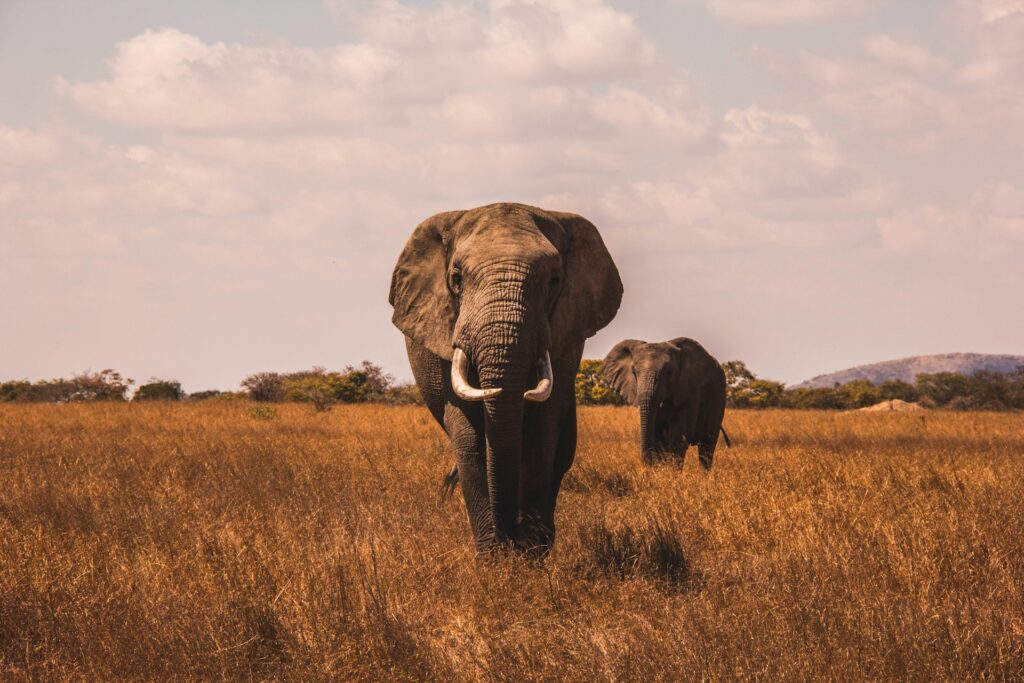
The Mara is only the start. Amboseli is known for its big elephant herds, with Kilimanjaro rising behind them on a clear morning. Samburu, in the north, has species you won’t find on a southern African safari, including Grevy’s zebra and reticulated giraffe.
Ol Pejeta Conservancy is where you go for the conservation story. It holds the last two northern white rhinos in existence, a mother and daughter under armed guard, Najin and Fatu. Ol Pejeta is also the largest black rhino sanctuary in East Africa, and it has all of the Big Five. Inside the conservancy, a sanctuary looks after chimpanzees rescued from the illegal wildlife trade, and it’s the only place in Kenya where you can see them.
Lake Nakuru National Park, in the Rift Valley, protects black and white rhinos. Its soda lake, known as the pink lake, is famous for its flamingos.
South Africa Wildlife: Kruger, Sabi Sands and Malaria-Free Reserves
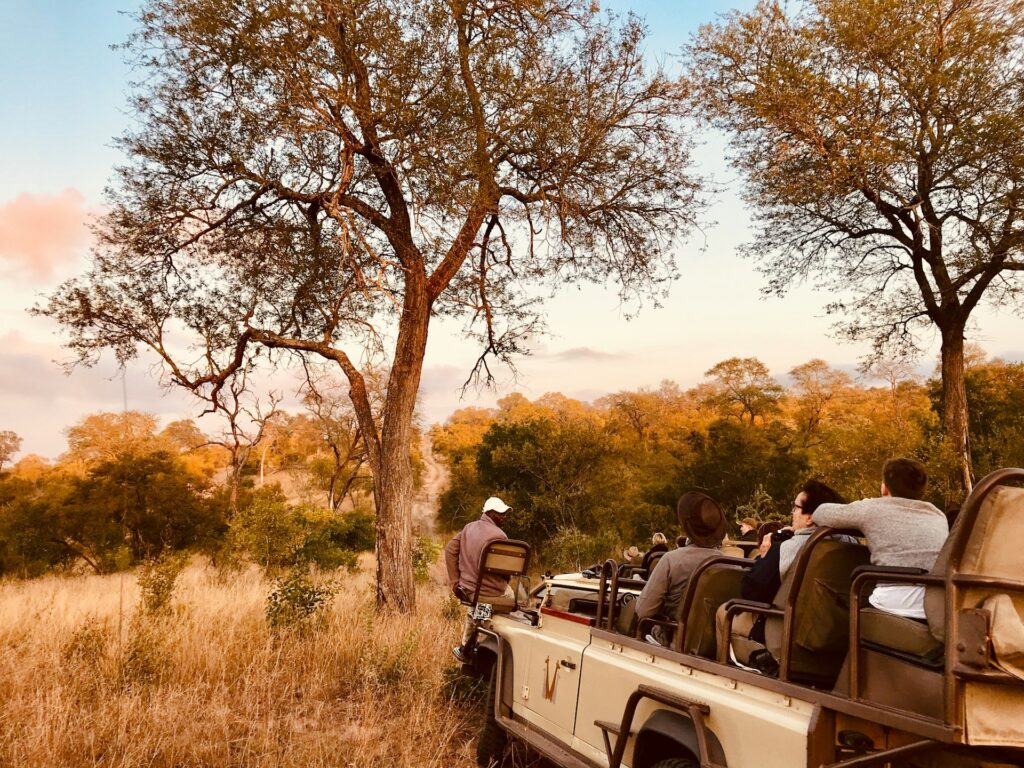
Kruger is huge and easy to get around, and you can drive through it. On its western edge, private reserves like Sabi Sands are famous for reliable leopard sightings.
Both countries have the Big Five, so that isn’t what sets them apart. The migration does, along with how much variety you can fit into a single Kenya itinerary, and for us those two things tip it in Kenya’s favor.
Beyond the Game Drive: Culture and Variety in Kenya
A Kenya trip can be built around more than animals. Under the conservancy model, lease payments go to Maasai landowners, so your stay supports the community directly. Many camps arrange visits with Maasai and Samburu guides.
Then there’s the range in a single trip: the Mara’s plains, Amboseli’s open country, the semi-desert of the north, highland conservancies, and the coast at Diani or Watamu to finish.
What Kind of Safari Do You Get?
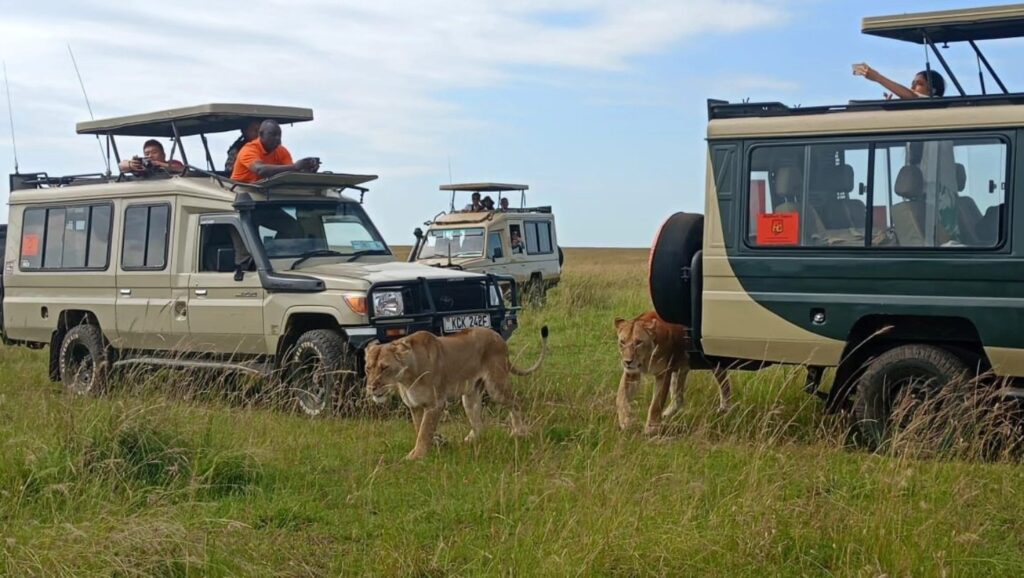
Tourists explore Masai Mara differently. The national reserve is the famous part: open plains, the best-known river crossing points, and the most visitors. Around it sit private conservancies such as Mara North, Naboisho, and Olare Motorogi. These are Maasai-owned lands leased to a small number of camps, with tight limits on beds and vehicles.
The reserve gives you the classic Mara view and the crossing points most people picture. In peak season, though, popular sightings can draw many tourists in vehicles meant to stay on the tracks.
The conservancies trade some of that scale for space. With fewer vehicles at each sighting, you tend to get longer, quieter time with the animals. In many of them, you can also go on night drives and walking safaris. Guides can often leave the track to follow a sighting, though the rules vary by conservancy.
South Africa has the same split. Kruger National Park is the equivalent of the reserve: huge, easy to explore, with visitors staying on the roads. Private reserves like Sabi Sands, on its western edge, work more like the conservancies, with off-road driving and night drives. So having both options isn’t unique to Kenya. What sets the Mara apart is the migration and the sheer scale of the landscape.
Neither approach is better across the board. If seeing the river crossings is your priority, you’ll want time in the reserve. Tourists who want space for themselves and want to engage in activities that the reserve doesn’t allow, including night drives, should choose a conservancy.
Safari Cost Comparison
Safari prices are usually quoted per person per day, based on two people sharing a twin room. On top of park and conservancy fees, that price covers your accommodation, a vehicle and guide, fuel, meals and transfers. As a rough guide for 2026:
- Budget camping with a shared group vehicle: [150 USD to 220 USD] per person per day.
- Mid-range lodge or tented camp with a private vehicle: [300 USD to 600 USD] per person per day.
- Luxury conservancy camp with a private vehicle and guide: [800 USD to 2,500 USD] per person per day.
The gap between the levels is about what you’re buying. At the budget end, you get simple accommodation, a fixed itinerary, and a shared vehicle.
In the middle, you get a comfortable camp or lodge and a vehicle that’s yours. At the top, you get a small camp in a private conservancy with very few other vehicles, night drives and walking safaris, and a guide who can shape each day around what you want to see.
What Moves the Price
Season is the biggest factor. July to October, when the migration is in the Mara, is peak season, and camps price accordingly. The low-season months bring lower rates. Beyond that, flying between camps instead of driving adds cost but saves time.
What South Africa Costs by Comparison
South Africa spans a similar spread. At the lower end, you can self-drive Kruger and stay in basic camps. At the top, private reserves like Sabi Sands are priced much like Kenya’s premium camps.
Best Time to Go on Safari in Kenya and South Africa
Best Time to Visit Kenya
July to October is migration season in the Mara. It’s the busiest period, so book early. January and February are dry, with good game viewing and fewer visitors. The long rains, roughly March to May, bring lower rates and green scenery, though some camps close.
Best Time to Visit South Africa
May to September is the dry season and the best time for game viewing in Kruger, because animals gather around water and the bush is thin. Summer is greener and hotter, and good for spotting baby animals. Cape Town is at its best from about November to March.
Before You Book: Practical Advice for a Kenya or South Africa Safari
Visas and Entry Requirements
Kenya replaced its visa system with an Electronic Travel Authorisation in January 2024. Every visitor needs one, including infants. You apply online before you travel, and airlines will refuse boarding without an approved eTA. Processing usually takes 24 to 72 hours, but apply at least a week out. There is no visa on arrival.
In South Africa, US and UK passport holders don’t need a visa for tourism stays of up to 90 days. Your passport must be valid for 30 days after you leave and have two blank pages
Vaccinations and Malaria
Kenya: A yellow fever certificate is required if you are arriving from or transiting a country with risk of yellow fever transmission. It is not required for travellers coming directly from Europe, North America or most of Asia, though some travellers choose to carry one anyway for onward travel.
Malaria risk exists in the Mara, Amboseli, Tsavo, Samburu and the coast. Nairobi and the central highlands are high enough to be low-risk. Most visitors on a standard safari circuit take prophylaxis, and you should get that prescription from your own doctor or travel clinic rather than from a safari company. Repellent, long sleeves at dusk and the mosquito nets our camps provide do most of the practical work.
South Africa: More than 95% of the country, including Cape Town, the Garden Route and Addo Elephant National Park, is free of malaria. The risk is in the north-east: Kruger and its private reserves, and coastal KwaZulu-Natal north of Richards Bay, with the risk highest between October and May.
For those areas, the same advice applies: get your prophylaxis from your own doctor or travel clinic. South Africa asks for a yellow fever certificate from travellers arriving from a risk country.
Safety
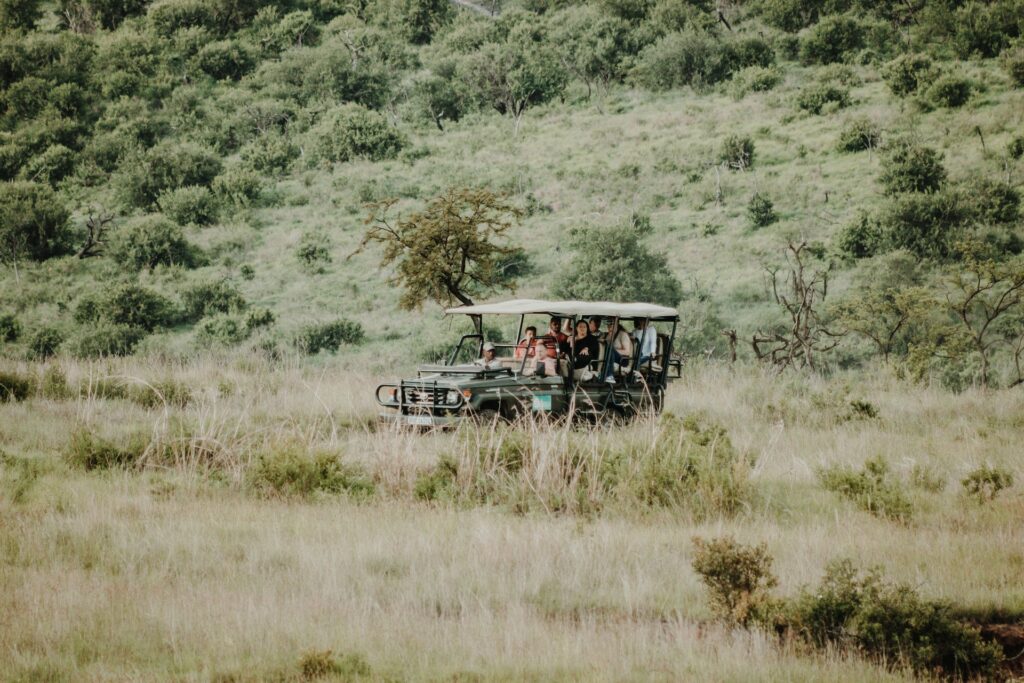
Kenya: The parks themselves are safe. The realistic risks on a Kenya safari are a vehicle accident on the Narok road and opportunistic theft in Nairobi, not wildlife. Keep valuables out of sight in the city, use booked transfers rather than flagging down vehicles, and stay in the car in the parks unless your guide tells you otherwise.
South Africa: The reserves and Kruger are safe for visitors, and the same rule applies: stay in the vehicle unless your guide says otherwise. Crime levels in the big cities are high, so the precautions look much like Nairobi’s. Keep valuables out of sight, use booked transfers or ride-hailing, and don’t walk around after dark.
What to Pack for a Safari
- Clothing: Neutral colors like khaki, olive, and tan, plus layers. Dawn game drives are cold, and midday is hot.
- Avoid: Bright colors and camouflage patterns, which are not allowed in Kenya.
- Sun and bugs: Hat, sunscreen, sunglasses, repellent.
- Gear: Binoculars, a camera with a good zoom, a headlamp, and a power adapter (Kenya uses the UK-style three-pin plug, so US travelers will need one).
- Leave behind: Single-use plastic bags, which Kenya restricts.
How to Choose a Safari operator
Any operator, including Meektrails Safaris, should be able to answer a few questions plainly. What’s included in the price, especially park and conservancy fees, transfers, and flights? How many guests share a vehicle? Who are the guides, and how long have they been guiding?
In Kenya: Meektrails Safaris is a member of the Kenya Association of Tour Operators (KATO), and you should expect any operator you consider to tell you its affiliations.
In South Africa: The equivalent to look for is membership of SATSA, the Southern Africa Tourism Services Association, whose members follow a code of conduct. Ask about guide qualifications too. Some operators use only guides with a FGASA (Field Guides Association of Southern Africa) qualification and treat it as a benchmark.
Frequently Asked Questions: Kenya vs South Africa Safari
1. Is Kenya or South Africa better for a first safari?
For most first-timers, we’d say Kenya. The Masai Mara delivers the safari most people picture: open plains, big herds, and from roughly July to October the chance of seeing the migration’s river crossings. Trips are usually fully guided, so you don’t have to plan routes or hunt for sightings yourself.
2. Is the Great Migration only in Kenya?
No. The herds also spend much of the year in Tanzania’s Serengeti. Kenya’s Masai Mara is where they cross the Mara River, which happens roughly between July and October. The timing shifts with the rains, so no operator can promise a crossing on a specific day.
3. How many days do I need for a Kenya safari?
Aim for seven to eight days. That’s enough for the Mara plus two other stops, such as Amboseli and Lake Nakuru, at a relaxed pace.
4. Do I need a visa to visit Kenya?
No visa, but you do need an Electronic Travel Authorisation (eTA). Everyone needs one, including infants. Apply online before you travel, ideally at least a week ahead, since processing usually takes 24 to 72 hours and there is no visa on arrival.
5. Is Kenya safe for a safari?
Yes. Kenya’s safari circuit is well established, and guides look after the logistics between airstrips, camps and conservancies.
Kenya or South Africa Safari: Our Verdict
Both countries will give you a safari you’ll talk about for years, so this was never a question of good against bad. It comes down to which trip you’re picturing.
If you desire a trip exploring open plains with big herds and a river full of wildebeest working up the nerve to cross, then it’s Kenya. South Africa doesn’t have the migration, and the conservancies around the Mara give you room to enjoy it without a line of vehicles. Add Amboseli’s elephants and Lake Nakuru’s rhinos, and you get a wide range of landscapes and wildlife in a single country.
South Africa earns its place too if you’d rather drive yourself through Kruger, explore Cape Town and the winelands as part of the holiday.
So if you want the classic safari and the chance of the migration, choose Kenya. If you want a malaria-free family trip, a self-drive or a city-and-wine add-on, choose South Africa
Plan Your Kenya Safari With Meektrails Safaris
If this post has pointed you toward Kenya, the next step is a conversation about your dates, who’s travelling, and what you most want to see. Tell us when you’re thinking of going, and we’ll come back within 12 hours with an itinerary and a price built around you. There’s no obligation, and if South Africa sounds like the better fit for you, we’ll say so.
Not ready for a quote yet? Send us your questions, and we’ll answer them. Click here to talk to the Meektrails Team.