
January is one of the best months for a safari in Kenya. The weather is dry and warm, the grass is short, and the wildlife is easy to find. It also lands in a sweet spot on the calendar. Holiday crowds thin out in late December, and the long rains of April and May are still months away. This guide covers what the weather is really like, which animals and events to look for, the parks worth your time, and how to plan around budget and logistics. Whether you are a first-timer looking to spot the Big Five or a returning traveler chasing the perfect photograph, a Kenya safari in January offers a lot to love.
Weather and Conditions in January
January falls in Kenya’s short dry season, which typically runs from about late December through February. Expect mostly sunny days, cool mornings, and little rain across the main safari regions. Showers are possible, but they tend to be brief and scattered rather than all-day downpours.
Temperatures vary with altitude. All figures below are approximate.
| Region | Typical daytime high | Typical night low | What it feels like |
|---|---|---|---|
| Maasai Mara (about 5,000 ft) | 25°C to 28°C | 13°C to 15°C | Warm days, chilly dawn drives |
| Amboseli | 30°C to 32°C | 18°C to 20°C | Hot and dry, often dusty |
| Tsavo East and West | 30°C to 34°C | 20°C to 22°C | Hottest of the main parks |
| Laikipia and Samburu | 28°C to 32°C | 15°C to 17.8°C | Hot days, cool nights |
| Coast (Mombasa, Diani) | 30°C to 32°C | 23.9°C to 25.0°C | Hot and humid, ideal beach weather |
Two practical effects of the dry weather matter for travelers. First, vegetation thins out, which makes animals far easier to spot. Second, roads are firm and passable, so game drives rarely get stuck in mud. The trade-off is dust, especially in Amboseli and Tsavo, so pack a bandana or scarf and protect your camera gear.
A short note on the bigger picture: weather patterns have grown less predictable in recent years, so an occasional early or lingering shower is not unusual. Treat January as reliably dry but not guaranteed.
Wildlife in January
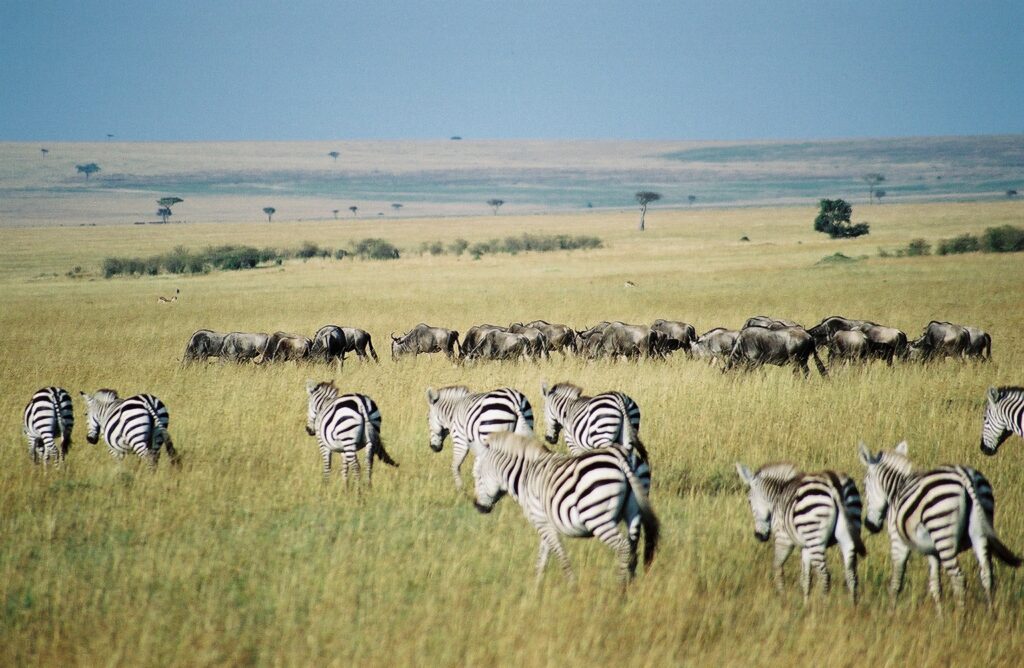
The biggest myth about a January safari is that it includes the Great Migration. It does not, at least not in Kenya. In January, the main wildebeest herds are in the southern Serengeti and Ndutu area of Tanzania, where calving season is underway. They typically do not cross into the Maasai Mara until around July.
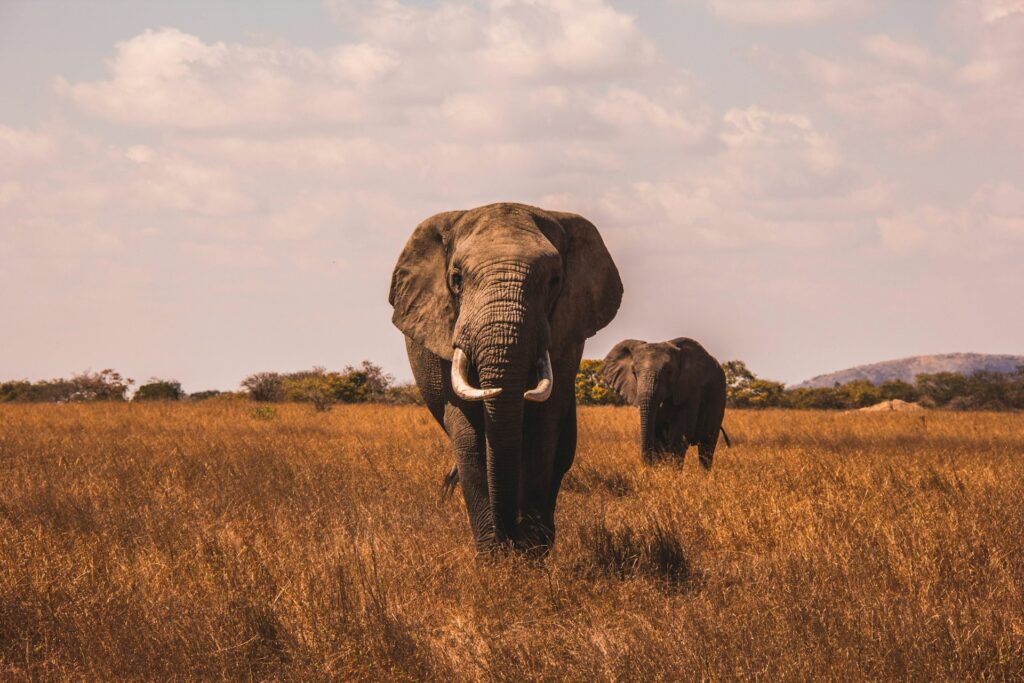
That said, the Mara is far from empty. Resident wildlife is abundant, and with short grass and shrinking water sources, the Big Five animals are all realistic targets across the country.
What January does deliver:
- Predators in the open. Lions, cheetahs, and hyenas are easier to find on short grass, and cheetahs often hunt in the cooler morning hours.
- Young animals. Many antelope, zebra, and elephant calves are born around the end of the wet season, so baby animals are common sights.
- Elephants and Kilimanjaro. Amboseli’s elephants wander the swamps beneath Mount Kilimanjaro. Clear mornings in the dry season offer the best chance of an unobstructed view of the peak.
- Northern specials. Samburu, Buffalo Springs, and Shaba offer species rarely seen in the south, including Grevy’s zebra, reticulated giraffe, Somali ostrich, beisa oryx, and gerenuk.
- Migratory birds. Birds from Europe and Asia spend the northern winter in Kenya, so January is excellent for birders, especially at lakes such as Naivasha and Nakuru.
If seeing the Great Migration river crossings is your top priority, plan for July through October instead. If you want superb general wildlife viewing with fewer vehicles, January is hard to beat.
Best Parks and Reserves to Visit in January
Maasai Mara National Reserve. Kenya’s signature park is excellent in January for big cats, elephants, giraffes, and resident herds of zebra and topi. Private conservancies bordering the reserve, such as Olare Motorogi, Naboisho, and Mara North, allow night drives, walking safaris, and off-road driving, with fewer vehicles at sightings.
Amboseli National Park. January’s dry spells draw elephants, buffalo, and hippos to the swamps, and the Kilimanjaro backdrop is hard to match. Plan for dust and heat, and go for the morning light.
Samburu National Reserve and Laikipia. The drier north suits travelers who want fewer crowds and unusual species. Laikipia’s private conservancies, including Ol Pejeta, are also known for rhino conservation, and Ol Pejeta is home to the last two northern white rhinos.
Tsavo East and Tsavo West. These huge parks have red-dust elephants and wide-open landscapes. January is warm and dry, so wildlife concentrates around waterholes. Pair Tsavo with a coastal extension for a classic bush-and-beach trip.
Lake Nakuru and Lake Naivasha. These Rift Valley lakes are strong for birds, rhinos, and giraffes, and they make an easy add-on between Nairobi and the Mara.
Nairobi National Park. Lions, black rhinos, and giraffes with the city skyline behind them. It works well as a half-day on arrival or departure.
Crowds, Prices, and Booking
January has two distinct halves. The first week or so is still tied to the year-end holidays, so lodges can be full and rates can carry holiday surcharges. From the middle of the month onward, crowds ease, and many camps and lodges drop into shoulder-season or even low-season pricing.
Compared with the July to October peak, a Kenya safari in January means:
- Fewer vehicles at big-cat sightings, especially in the Mara.
- More room to negotiate or find package deals, particularly late in the month.
- Better availability at top camps, though the best properties still book out for the holiday window.
Park and conservancy fees for non-residents are charged in U.S. dollars and change periodically, so check current rates with the Kenya Wildlife Service. Costs vary widely by style of travel, from budget camping safaris to luxury tented camps with private guides.
Sample Itineraries
Seven days: Mara and Amboseli
- Day 1: Arrive in Nairobi, transfer to your hotel, and rest.
- Days 2–4: Fly to the Maasai Mara for three nights of morning and late-afternoon game drives.
- Day 5: Fly back to Nairobi, then drive or fly to Amboseli.
- Days 6–7: Two game drives in Amboseli, with a sunrise view of Kilimanjaro if the sky is clear, then return to Nairobi for your flight home.
Ten days: Wildlife variety, north to south
- Day 1: Arrive in Nairobi, with an optional afternoon visit to Nairobi National Park.
- Days 2–3: Fly to Samburu for northern specials such as Grevy’s zebra and gerenuk.
- Days 4–5: Continue to Laikipia for a conservancy stay, with a chance of walking, night drives, and rhino viewing.
- Days 6–8: Fly to the Maasai Mara for three nights.
- Day 9: Return to Nairobi and visit Amboseli if time allows.
- Day 10: Depart.
For a beach finish, swap the last Amboseli leg for a flight to Diani or Mombasa, or combine Tsavo with the coast. Distances are large, and some roads are slow, so internal flights save a lot of time on multi-park trips.
Meektrails Safaris, one of the top tour companies in Kenya, can customize your travel itinerary. Click here to contact a safari consultant.
Practical Tips
Entry requirements. Most visitors need an electronic travel authorization (eTA) before arriving. Apply through the official Kenyan government portal well ahead of your trip, and confirm current rules for your nationality.
Health. Talk to a travel clinic about malaria prevention and routine vaccinations at least four to six weeks before departure. Use insect repellent at dusk and dawn. Some countries require proof of yellow fever vaccination depending on your route.
Packing. Pack layers: a fleece or light jacket for dawn drives, then a hat, sunglasses, and breathable shirts for midday heat. Neutral colors such as khaki, olive, and tan work best. Add sunscreen, a scarf or buff for dust, and a reusable water bottle.
Photography. A lens in the 200–400mm range suits most wildlife. Bring a dust-proof bag and lens cloths, and shoot in the golden light shortly after sunrise and before sunset.
Money and tipping. Bring small U.S. dollar bills and Kenyan shillings for tips and curio shopping. Tipping your guide and camp staff is customary.
Travel insurance. Choose a policy that covers medical evacuation, since many camps are remote.
Responsible travel. Choose operators that support local communities and conservation, keep a respectful distance from animals, and follow your guide’s instructions.
Safari in Kenya
A Kenya safari in January gives you dependable dry weather, strong wildlife viewing, and lighter crowds once the holiday rush passes. You trade the drama of the river crossings for comfortable conditions, excellent predator sightings, baby animals, and a wider choice of lodges. Kenya in January rewards both the planner and the early riser.

