
If you have only one day in Nairobi but still want to go on safari, Nairobi National Park gives you an unusually convenient option. Instead of spending several hours traveling to another destination, you can leave your hotel early in the morning and be watching wildlife within a relatively short time. The park is about 10 kilometers from Nairobi’s Central Business District. That proximity makes the park particularly useful for travelers with limited time and people arriving in Nairobi before continuing to destinations such as the Masai Mara or Amboseli.
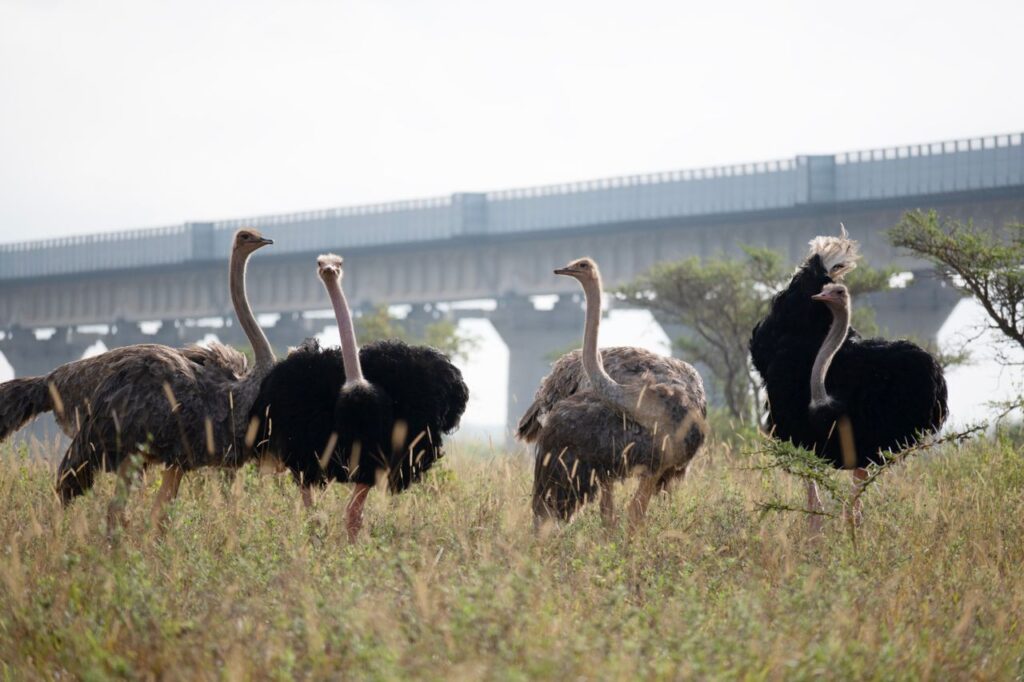
The experience is also different from a conventional safari outside the city. As you drive across the park, you may see wild animals move across the grasslands while Nairobi’s buildings form part of the distant horizon. It is almost like placing two completely different worlds in the same photograph.
A National Park Just Outside the City Center
One of the biggest advantages of this itinerary is the short distance between Nairobi’s urban areas and the park. That makes a Nairobi National Park day safari possible even when you have only a single day available. You can start before sunrise, spend the most productive hours of the morning on a game drive, return toward the city around midday, and still have time for another Nairobi attraction or an evening flight. That flexibility is especially useful if you are staying in central Nairobi, Westlands, Karen, or near the airport.
What Makes the Urban Safari Experience Special
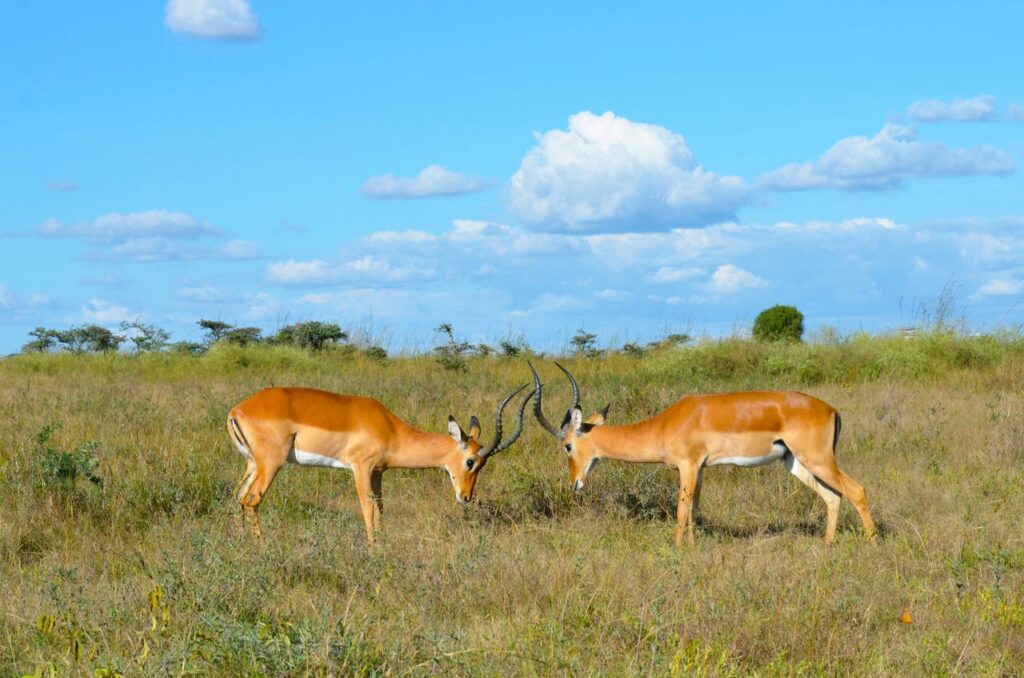
The defining feature of Nairobi National Park is its relationship with the city. You are not traveling deep into a remote wilderness area; instead, you are experiencing wildlife on Nairobi’s doorstep. The park has open plains, riverine habitats, and other ecosystems that support a variety of animals and birds, while the skyline can appear behind the landscape at different points. For photographers, that contrast can be interesting because a single image can combine wildlife, grassland, and skyscrapers.
The park is also more than a quick checklist of animals. You can use your game drive to learn how wildlife survives beside a rapidly growing metropolitan area, why certain habitats attract particular species, and how conservation efforts protect threatened animals. If you have never been on safari before, this is a useful introduction because you get a taste of the safari rhythm without committing several days to a longer itinerary.
Best Time to Start Your Nairobi National Park Safari
For a one-day itinerary, start early. A 6:00 AM park entry gives you access to the cooler first hours of the day, when many animals are still active. You also get softer morning light, which is helpful if photography is one of your priorities.
Think of your safari day like a limited photography budget: you want to spend your best minutes when the conditions are strongest. By late morning, temperatures can rise, and some animals may become less active or seek shade. That does not mean the safari stops being worthwhile after breakfast.
Your 1-Day Nairobi National Park Itinerary
5:30–6:00 AM: Hotel pickup and park entry
Your day begins before the city becomes busy. Depending on where you are staying, arrange pickup early enough to reach the park around its 6:00 AM opening.
Once you arrive at the park, the character of the morning changes quickly. The sounds and traffic of Nairobi begin to fade as you move onto the park roads, and the first light spreads across the grasslands. This is when you want to slow down and pay attention. Your guide may already be watching for tracks, movement, birds, or distant shapes that you would probably miss on your own.
6:00–9:00 AM: Morning game drive
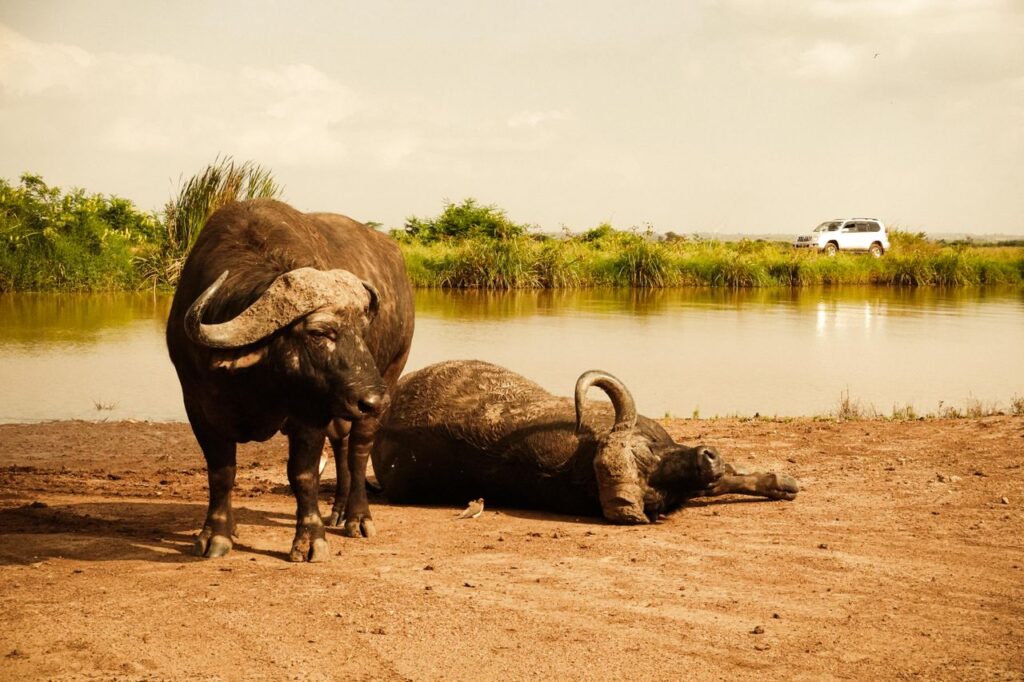
Spend the first major part of your itinerary on a Nairobi National Park game drive. Possible sightings include black rhinos, white rhinos, lions, buffaloes, giraffes, zebras, elands, warthogs, and numerous bird species. There are more than 400 recorded bird species in the park.
9:00–12:30 PM: Continue exploring the park
The park’s varied landscapes help support different species, so changing locations can change what you encounter. This is also a good time to slow down for photography. The light is becoming brighter, but you may still find interesting compositions involving animals, vegetation, and the Nairobi skyline.
If you enjoy birdwatching, tell your guide before the safari begins so they can allow more time around productive habitats. A one-day safari does not have to be a race for the Big Five animals; you can make the experience more rewarding by deciding what kind of wildlife experience you actually want.
12:30–2:00 PM: Lunch and relaxation
After several hours in the vehicle, give yourself time to eat and recharge. You can arrange lunch in the Karen area, return to your hotel, or choose another suitable restaurant depending on your plans. If you are continuing with other attractions, avoid making lunch unnecessarily long because Nairobi traffic can eat into your afternoon.
This is also a useful moment to review your photographs, drink water, and decide how you want to spend the rest of your day. If the morning game drive was your main objective and you already had excellent sightings, there is nothing wrong with taking a slower afternoon.
2:00–5:00 PM: Afternoon options
The afternoon light also changes the appearance of the park. As the sun moves lower, the landscape can become warmer and more dramatic, which is excellent for photography. Giraffes can stand out beautifully against the open horizon, while groups of zebra and buffalo create strong patterns across the grass.
Wildlife You Can See in Nairobi National Park
One of the major attractions of the park is its variety. Rhinos, lions, buffaloes, giraffes, and zebras are among the animals you may encounter. Antelopes, warthogs, hippos, and numerous bird species add variety to the drive.
Rhinos are particularly important to the park’s identity, and many visitors specifically hope to see them. Lions can also be encountered, but no responsible guide should promise a particular animal on a particular day. You are visiting a living ecosystem, not a wildlife exhibit. Weather, vegetation, animal movements, recent sightings, and even the behavior of other vehicles can influence what you see.
If you are interested in photography, ask your guide about the animals and habitats you are most interested in before entering the park. A wildlife-focused itinerary can be planned differently from a birding-focused itinerary. This small conversation can make a big difference because your guide can understand what you hope to experience rather than assuming every traveler wants the same safari.
Nairobi National Park Entrance Fees
Kenya Wildlife Service’s current Nairobi National Park tariff lists different conservation fees according to visitor category. The current rates shown by KWS are KES 1,000 for East African citizen adults, KES 1,350 for Kenya resident adults, USD 80 for non-resident adults, and USD 40 for African citizen adults. Child rates are lower.
| Visitor category | Adult | Child |
|---|---|---|
| East African Citizen | KES 1,000 | KES 500 |
| Kenya Resident | KES 1,350 | KES 675 |
| African Citizen | USD 40 | USD 20 |
| Non-Resident | USD 80 | USD 40 |
These figures are the park conservation fees, not necessarily the total price of your safari. Your final cost may also include the safari vehicle, driver-guide, transportation, meals, optional activities, and accommodation. Self-organized visitors can pay through the KWS eCitizen payment system. Always confirm the current fee before booking because conservation tariffs can change.
Tips for Getting the Most From Your Safari
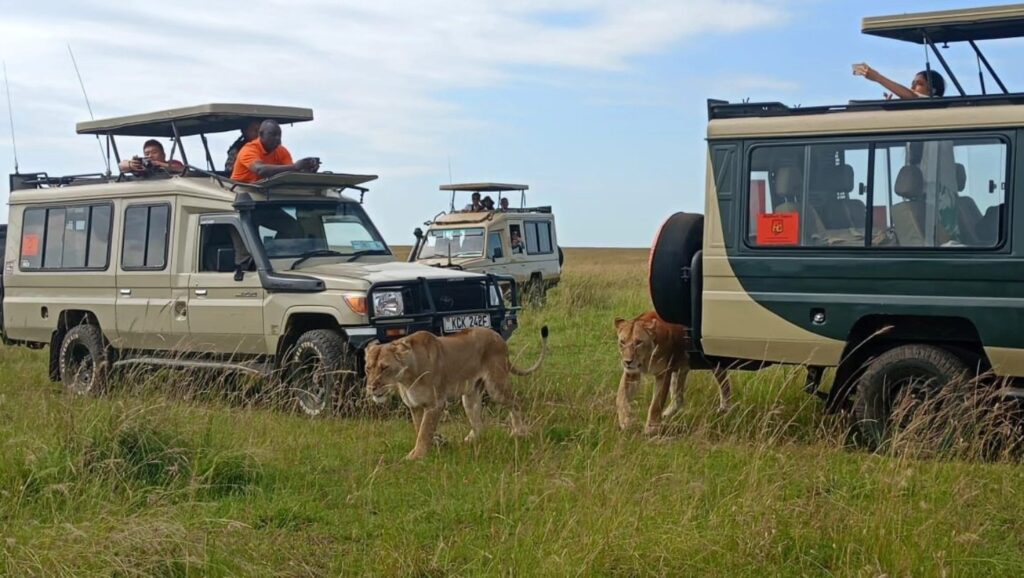
Your choice of safari vehicle can influence your experience. A 4×4 safari vehicle with a pop-up roof gives you a good viewing position and makes it easier to photograph animals from different angles. A knowledgeable driver-guide is equally important because safari is not simply about driving around until you happen to find animals. Guides interpret tracks, behavior, habitats, and recent sightings, helping you understand what you are seeing rather than simply pointing at it.
You should also keep your expectations realistic. Nairobi National Park is wild, and there is no guarantee that you will see lions, cheetahs, or rhinos on every drive. What you can control is your preparation, timing, and choice of guide. Enter early, stay patient, keep your eyes open, and avoid spending the entire drive looking through your phone. Some of the best sightings happen when you are simply watching the landscape and allowing your guide to do what they do best.
Another important consideration is traffic. If you have an international flight later in the day, tell your safari operator your departure time before the itinerary is confirmed. A safari that finishes at 5:00 PM may sound fine until you add Nairobi traffic and airport check-in requirements.
Finally, respect the park. KWS describes Nairobi National Park as a place where visitors are entering wildlife habitat. Thus, you should respect animals’ right of way, keep noise down, avoid feeding wildlife, carry out trash, and remain inside vehicles except in designated areas. These rules are not just formalities. They help protect both visitors and wildlife while allowing future travelers to enjoy the same remarkable ecosystem.
A safari in Kenya’s capital
A Nairobi National Park itinerary for one day can give you a genuine safari experience without requiring you to leave Kenya’s capital for several days. The key is to start early, prioritize the morning game drive, and build the rest of your schedule around what matters most to you.