
A Big Five Kenya safari is one of those travel experiences that can turn a simple holiday into a collection of stories. The term Big Five refers to the African lion, leopard, African elephant, African buffalo, and rhinoceros. The name originally came from the difficulty and danger associated with hunting these animals on foot. Today, it is primarily used in wildlife tourism and conservation.
What Are the Big Five?
The Big Five are not necessarily the five largest animals in Africa. Instead, they are the lion, leopard, elephant, buffalo and rhino. Seeing these animals in the wild represents an opportunity to appreciate their behaviour, habitats, and conservation stories rather than simply collecting photographs. This means that planning a Big Five safari is less about finding one magical park and more about understanding how different destinations complement one another.
Lion
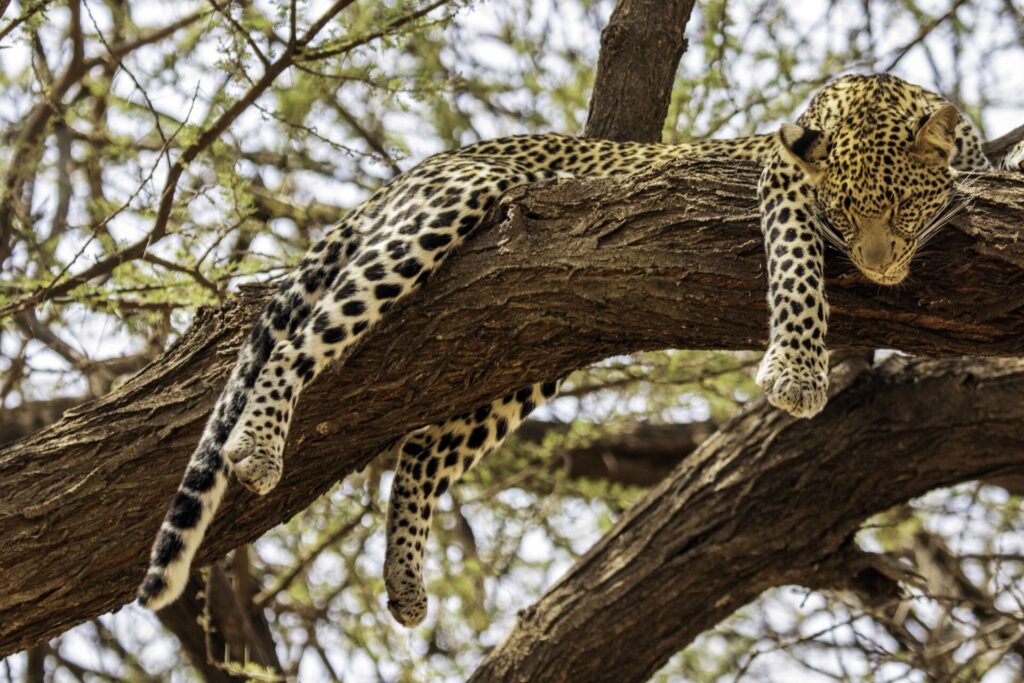
The African lion is usually the Big Five animal travellers most imagine when they think about a Kenya safari. Kenya’s lions occur in several important ecosystems, including the Masai Mara, Amboseli, Tsavo, and Ol Pejeta Conservancy.
Lions are often easier to spot than leopards because they can spend time in relatively open areas. However, their behaviour changes throughout the day. During the hotter hours, a pride may lie beneath a tree or in tall grass, appearing almost completely uninterested in the safari vehicles passing nearby. Early morning and late afternoon can be much more rewarding because temperatures are lower and lions may become active.
Leopard
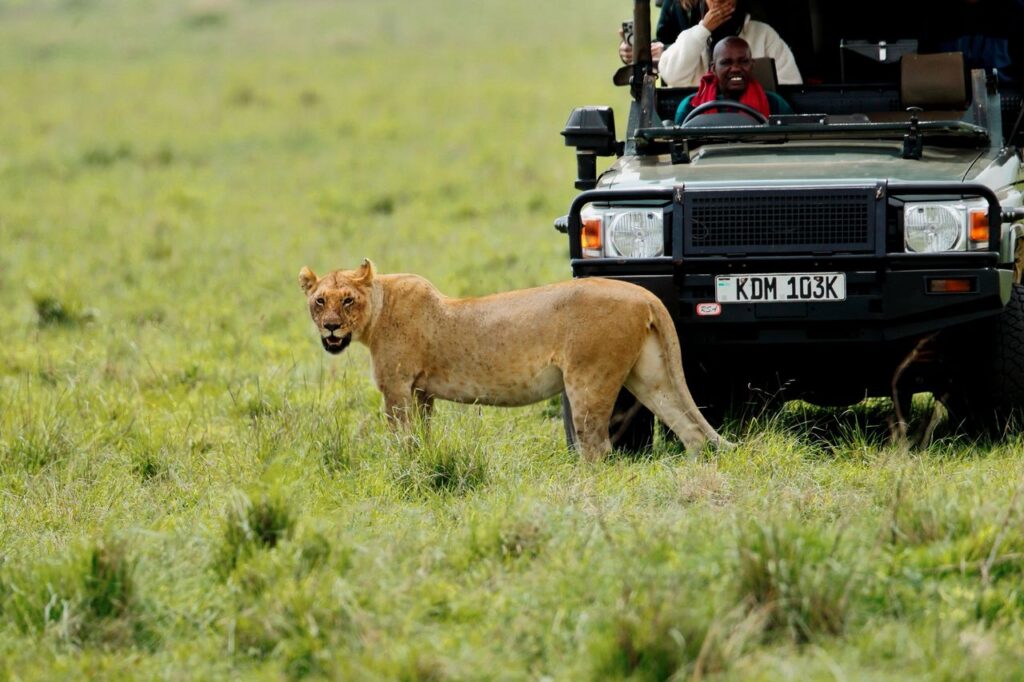
The leopard is often the animal that makes a Big Five safari feel like a treasure hunt. Leopards are powerful predators but are much more secretive than lions. Their spotted coats provide excellent camouflage, allowing them to disappear among bushes, rocks and shadows. They may also spend time resting in trees, particularly after making a kill.
The Masai Mara is one of the places where travellers have a good opportunity to search for leopards, especially along riverine areas and sections of the reserve with thicker vegetation. Ol Pejeta also supports leopards; the conservancy currently reports around 20 elusive leopards alongside its other predators.
Elephant
The African elephant is one of Kenya’s most impressive safari animals, and you don’t need to be a wildlife expert to understand why. An adult elephant can dominate the landscape simply by walking through it. Amboseli National Park is particularly famous for elephant viewing.
Elephants can also be seen in the Masai Mara, Ol Pejeta, Samburu and other Kenyan wildlife areas. At Ol Pejeta, for example, elephants move through the wider Laikipia landscape, with wildlife corridors helping migratory species move between habitats.
Buffalo
Buffalos are sometimes overlooked because lions and elephants tend to receive more attention, but they are among the most fascinating animals to observe. They occur in many Kenyan wildlife areas, including the Masai Mara, Amboseli, and Lake Nakuru National Park.
Buffalo prefer areas where food and water are available, and you may encounter them close to wetlands, rivers, or open grasslands. Their presence can also provide clues about predator activity because lions frequently target large herbivores. When your guide stops for a buffalo herd, don’t automatically assume that nothing else is happening. Look carefully at the edges of the herd. A lion watching from cover or a group of calves behaving nervously can turn an ordinary buffalo sighting into something much more interesting.
Rhino
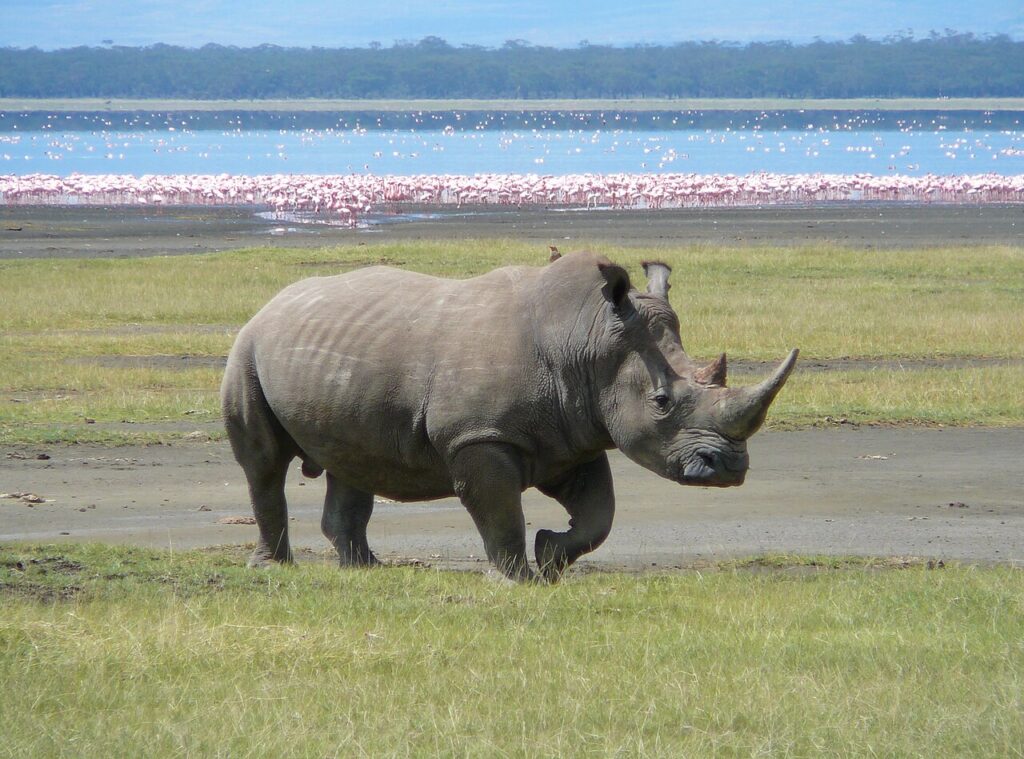
Rhinos are among the most significant animals to include on a Big Five Kenya safari, particularly because their conservation story is inseparable from Kenya’s wildlife history. Kenya is home to black and southern white rhinos, while Ol Pejeta also protects the world’s last two northern white rhinos. Kenya Wildlife Service currently reports approximately 2,102 rhinos nationally, including 1,059 black rhinos, 1,041 southern white rhinos and the two northern white rhinos.
For travellers specifically interested in rhinos, Ol Pejeta Conservancy is one of the country’s major destinations. Rhino sightings can be especially rewarding because you are observing an animal whose survival depends heavily on conservation and habitat protection.
Best Places for a Big Five Kenya Safari
Kenya has no single safari destination that has a monopoly on the Big Five. Different parks and conservancies offer different strengths, landscapes, and wildlife experiences. Choosing where to go should depend on what you most want from your trip.
Masai Mara National Reserve
The Masai Mara is one of Kenya’s best-known wildlife destinations and an obvious choice for travellers interested in a classic Big Five safari. Its grasslands, riverine habitats, and surrounding conservancies support lions, leopards, elephants, buffalo and rhinos. Rhino sightings are less predictable than sightings of some of the other species. The Mara’s predator-rich ecosystem is especially appealing to travellers who want opportunities to observe lions and search for elusive leopards.
Amboseli National Park
If elephants are the stars of your safari, Amboseli National Park deserves a place near the top of your itinerary. Kenya Wildlife Service calls it the “Home of the African Elephant.” The combination of elephants, open plains, and Mount Kilimanjaro creates one of Kenya’s most recognizable safari landscapes.
Amboseli is also home to lions, buffalo, and other wildlife. The park works particularly well as part of a wider Kenya safari rather than being treated solely as a Big Five checklist destination.
Ol Pejeta Conservancy
Ol Pejeta Conservancy is particularly important for travellers who want to combine Big Five viewing with conservation. This conservancy protects rhinos while also supporting elephants, lions, leopards, buffalo, and other wildlife. Rhinos are the major attraction here, but they are far from the only reason to visit. The conservancy reports six resident lion prides and around 20 elusive leopards, while elephants can also move through the landscape.
Lake Nakuru National Park
This national park offers an excellent combination of rhino viewing, scenery, and birdlife. It is a protected sanctuary for black and white rhinos and is also home to buffalo, lions, leopards, giraffes, zebras, and many other species. The landscape is another reason to visit. The lake, surrounding grasslands, woodland, and escarpments create a dramatically different setting from the open plains of the Mara. With approximately 450 bird species recorded, it can also be a rewarding destination for travellers who want more than large mammals.
Samburu National Reserve
Visit Samburu National Reserve for a different flavour of Kenyan safari. The scenery is drier and more rugged, and the wildlife includes several species strongly associated with northern Kenya. Elephants, lions, leopards, and buffalo can be encountered. The broader Samburu landscape is known for distinctive northern species that you may not encounter on a traditional southern Kenya itinerary.
Samburu works particularly well as an addition to a Big Five trip because it changes the scenery and wildlife experience. Instead of repeating the same type of savannah, you move into a more arid ecosystem with different vegetation, landscapes, and species.
Best Time for a Big Five Kenya Safari
There is no single month that guarantees the Big Five. Kenya’s wildlife responds to rainfall, food availability, temperature, water sources, and seasonal movements. Still, some periods are commonly preferred because the combination of weather and wildlife conditions can make game viewing easier.
Dry Season: June to October
The June to October dry season is a popular period for safari because vegetation is often less dense and animals may congregate around dependable water sources. Open landscapes can make wildlife easier to spot, while dry roads in many areas can make game drives more comfortable. These months also overlap with the period when many international visitors travel to the Masai Mara for migration-related experiences.
The trade-off is that popular destinations can become busier, especially during peak travel periods. Accommodation prices may also be higher than during quieter seasons. If you want the classic combination of dry landscapes, wildlife viewing, and comfortable game-drive conditions, however, this period can be very attractive.
Wet Season: November to May
The November to May period brings a different side of Kenya. Rain transforms the landscapes, vegetation becomes greener and many areas look dramatically different from the dry-season savannah. Some periods also coincide with wildlife births and abundant young animals, depending on the ecosystem and rainfall patterns.
Rain can make some unpaved roads muddy, and showers may interrupt game drives. But don’t assume that rain automatically means a poor safari. Beside, there are often fewer visitors than during peak dry-season periods. For photographers, a green Kenya can be every bit as impressive as the golden landscapes of the dry season.
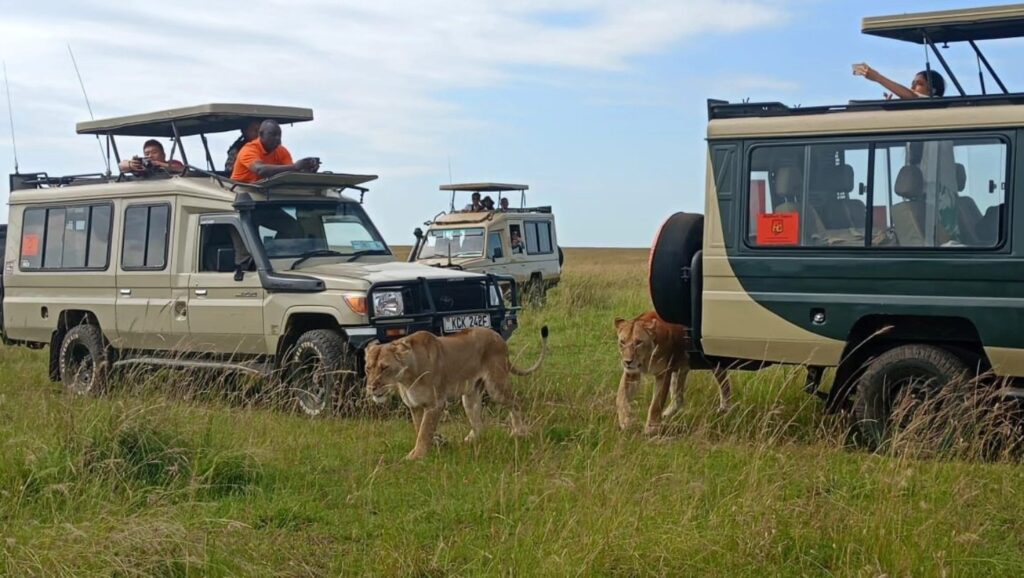
Where and When to See Each of the Big Five
The following guide provides a practical starting point rather than a guarantee. Wildlife sightings can change from one day to another, and the best time of day may also depend on weather and animal behaviour.
| Big Five animal | Best Kenyan destinations | Good months to consider | Best time of day | What to look for |
|---|---|---|---|---|
| Lion | Masai Mara, Amboseli, Ol Pejeta, Lake Nakuru, Tsavo | June–October; January–February | Early morning, late afternoon | Prides, cubs, hunting behaviour, resting under trees |
| Leopard | Masai Mara, Ol Pejeta, Lake Nakuru | Year-round, with good visibility in drier periods | Early morning, late afternoon | Trees, riverine vegetation, tracks, alarm calls from prey |
| Elephant | Amboseli, Masai Mara, Ol Pejeta, Samburu | June–October; January–February | Morning and afternoon | Family groups, calves, feeding and social behaviour |
| Buffalo | Masai Mara, Amboseli, Lake Nakuru, Ol Pejeta | Year-round | Morning and afternoon | Large herds, grazing, calves and predator interactions |
| Rhino | Ol Pejeta, Lake Nakuru, Nairobi National Park, Tsavo West | Year-round | Morning and afternoon | Black and white rhinos, grazing, territorial behaviour |
Best Time of Day to See the Big Five
Early morning game drives
An early morning game drive is one of the most valuable parts of a Kenya safari. The temperatures are cooler, the light is soft, and many animals are still active after the night. Predators such as lions may be finishing a hunt or moving between resting locations, while herbivores are often feeding before the heat becomes intense.
Early morning is also excellent for photography. The low-angle sunlight can illuminate animals without the harsh shadows you often get around midday. Even if you don’t find the animal you hoped for, the drive itself can be productive because tracks, birds, grazing herds, and changing light provide plenty to observe.
Late afternoon and evening
The late afternoon game drive is another productive period. As the temperature drops, wildlife often becomes more active again. Elephants may move toward water, buffalo may gather in open areas, and predators can begin positioning themselves for the night.
The quality of light is an added advantage. Golden-hour conditions can make an ordinary wildlife encounter look extraordinary, especially when an elephant walks across a dusty road, or a lion stands against a glowing horizon. Depending on park rules and the safari itinerary, some conservancies may also offer activities that extend beyond the standard national-park game-drive schedule.
Plan Your Big Five Safari With Meektrails Safaris
A well-planned Big Five Kenya safari can combine the country’s strongest wildlife areas according to your interests, available time, and budget. Meektrails Safaris helps travellers build Kenya safari itineraries around destinations such as the Masai Mara and Amboseli, with options for families, groups and tailor-made trips.
For a traveller focused specifically on the Big Five, an itinerary could combine the Masai Mara for big cats and classic savannah wildlife. It also has Amboseli for elephants and dramatic landscapes, and Ol Pejeta or Lake Nakuru for stronger rhino-focused opportunities. The right combination depends on how many days you have. A longer itinerary gives you more time to slow down and enjoy each ecosystem rather than rushing between parks.
Wildlife safari in Kenya
A Big Five Kenya safari offers much more than the chance to photograph five famous animals. It takes you through different landscapes, including the grasslands of the Masai Mara and the conservation-focused landscapes of Ol Pejeta. Each destination has its own character, and that variety is one of Kenya’s greatest strengths as a safari destination.