
Kenya is one of Africa’s most exciting destinations for anyone fascinated by lions, leopards and cheetahs. Across its grasslands, woodlands, river valleys and semi-arid plains, these powerful predators live alongside other animals. Kenya’s national parks and conservancies are important habitats for predators. Besides, conservation teams increasingly use monitoring, research and community partnerships to understand how these animals move and survive. For travellers planning their first big cats wildlife holiday, choosing where to go is as important as deciding when to travel. If your priority is seeing big cats, the following destinations deserve a place on your itinerary.
1. Maasai Mara National Reserve
The Maasai Mara National Reserve is arguably the first destination that comes to mind when travellers picture a Kenyan big cat safari. Its grasslands provide excellent habitat for predators and their prey, and the reserve is particularly famous for lions, cheetahs and leopards.
The reserve’s landscape is especially dramatic during periods when large numbers of herbivores move through the wider Mara-Serengeti ecosystem. It creates opportunities to witness predator-prey interactions. A lion pride resting beside a track or a leopard disappearing into thick vegetation can become memorable parts of a game drive.
What makes the Mara special is not simply the possibility of seeing a particular species but the variety of encounters that can happen within a single morning or afternoon. For photographers, the open plains can provide beautiful sightlines, especially in the early morning when the light is soft.
2. Amboseli National Park
Amboseli National Park is best known for its elephants and views of Mount Kilimanjaro, but it also offers opportunities to encounter African predators. As a classic wildlife safari destination, the park has grass plains, acacia woodland, thorny bushland, swamps, and marshes supporting different wildlife. The habitats create an interesting environment for searching for lions and other carnivores.
The open areas can make wildlife easier to observe from a distance, while the vegetation around water sources may require a more patient approach. Lions are the big cats most likely to attract attention, but safari travellers should remember that sightings are influenced by season, prey movement, water availability and individual animal behaviour. Early morning game drives can be rewarding because temperatures are cooler.
3. Samburu National Reserve
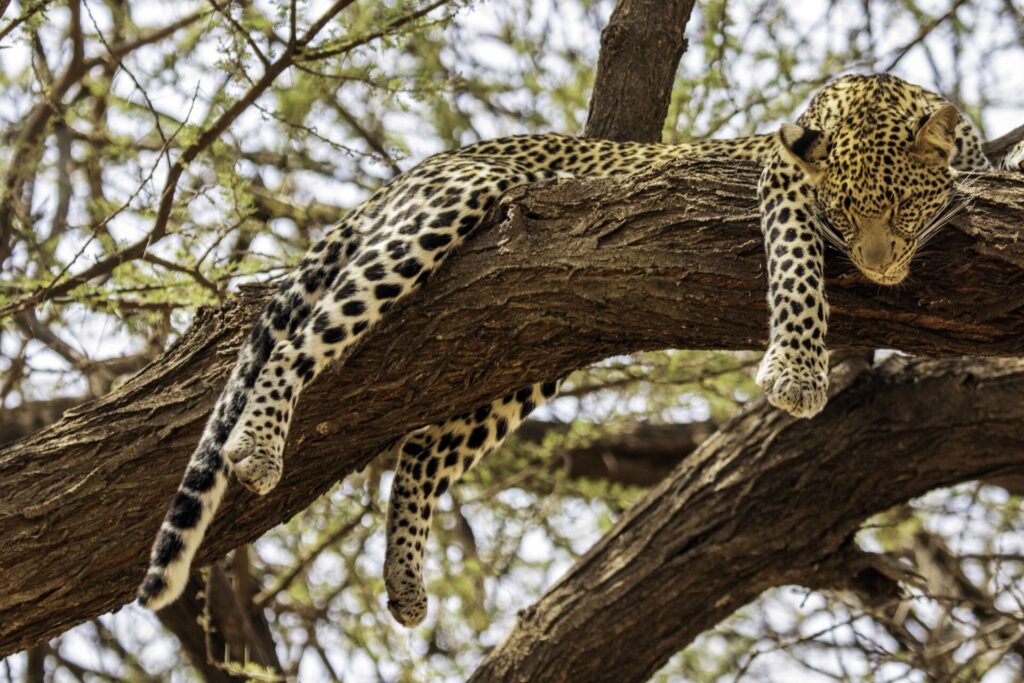
Samburu National Reserve offers a different atmosphere from the lush-looking plains that many travellers associate with the Maasai Mara. The reserve’s landscape has dry bush, open areas, and the influence of the Ewaso Nyiro River. This combination creates a distinctive wildlife environment where lions, leopards, and cheetahs can be spotted.
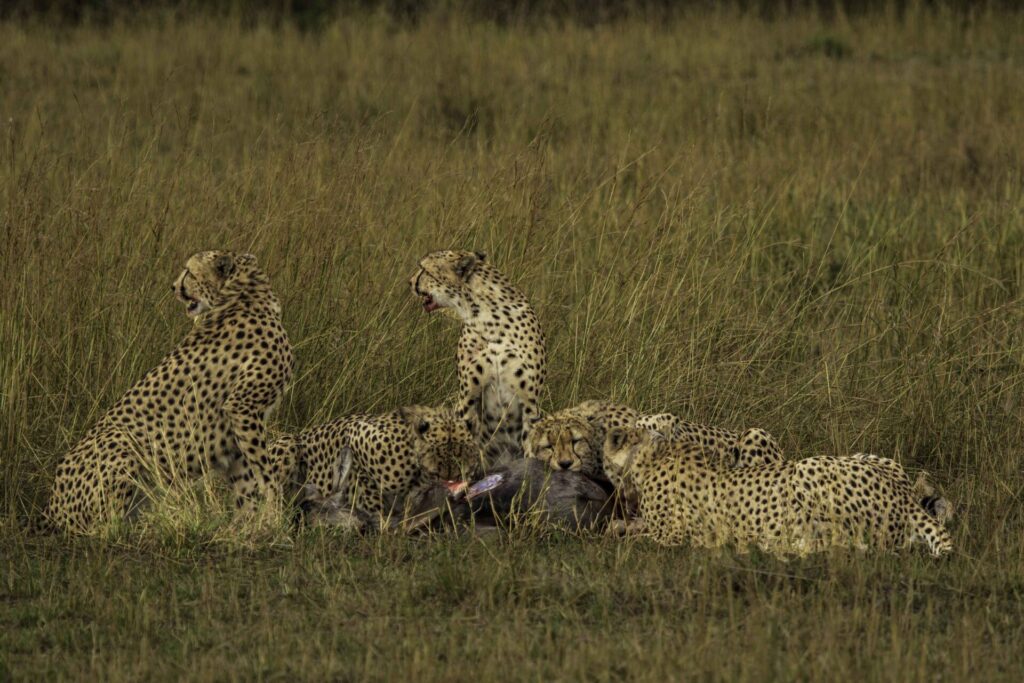
Lions may be found resting during the hotter parts of the day and becoming more active later, while leopards can be difficult to spot because of their secretive behaviour. Cheetahs may use more open ground where their speed gives them an advantage, although sightings naturally depend on the conditions of the day.
The dry environment can sometimes make tracks easier to interpret, giving an experienced guide useful clues about recent animal movement. At the same time, the landscape can make wildlife viewing visually distinctive with its rocky terrain and sparse vegetation.
4. Tsavo East National Park
Tsavo East National Park has a semi-arid landscape, red soils, acacia scrub, open plains, and river systems. It is famous for its elephants, but predators are also an important part of the ecosystem. Maneless lions are among the park’s attractions, an unusual feature associated with the Tsavo region.
The park’s enormous size means that wildlife encounters can sometimes feel wonderfully remote. You may drive across broad stretches of wilderness without seeing another vehicle before suddenly finding elephants, lions, or other wildlife near a water source.
The lions of Tsavo have a remarkable place in Kenya’s wildlife history. The region became internationally famous because of the man-eating lions associated with the construction of the Kenya-Uganda Railway in 1898. Water sources such as the Galana River and other seasonal resources influence where wildlife gathers. Experienced guides often pay close attention to these areas.
5. Tsavo West National Park
Tsavo West National Park provides another fascinating setting for big-cat enthusiasts, but its landscape is more varied and rugged than Tsavo East. One of its best-known attractions is Mzima Springs. This is where clear water creates an oasis-like environment in an otherwise dry region. The park is also historically associated with the famous Tsavo lions, giving a big-cat safari here an additional cultural and historical dimension.
Tsavo West can be particularly rewarding for travellers who enjoy varied scenery rather than a single landscape type. In the same day, you can explore its volcanic formations, wildlife, springs, and wide savannah views. Its location also makes it possible to combine the park with Amboseli or a coastal itinerary depending on your route.
6. Ol Pejeta Conservancy
Ol Pejeta Conservancy in Laikipia offers one of Kenya’s most interesting big-cat experiences because wildlife viewing is closely connected to conservation, research, and monitoring. Its recent information highlights lions, cheetahs, and leopards among its predator populations, while its research programme examines relationships between these carnivores and their prey.
The conservancy provides an opportunity to learn about how wildlife managers track animals, understand their movements, and study interactions between predators. The conservancy’s research programme examines leopard interactions with lions, cheetahs, and spotted hyenas. Also, it studies the effects of larger predators on cheetah survival. This matters because big cats do not live in isolation. A cheetah’s ability to survive depends not only on finding prey but also on avoiding competitors that can steal kills or threaten cubs.
For travellers interested in the science behind wildlife protection, Ol Pejeta provides an especially informative addition to a Kenya safari.
Best Time to See Big Cats in Kenya
There is no single month that guarantees the best big-cat sightings throughout Kenya because each ecosystem responds differently to rainfall, prey movement, and vegetation. In general, dry-season months can make wildlife easier to locate because water becomes more concentrated and vegetation is less dense. However, the green seasons can produce excellent photographic landscapes, while predator activity can increase whenever prey becomes abundant.
In the Maasai Mara, the period associated with the annual wildebeest movement can create spectacular predator-prey opportunities. But you should remember that the timing and location of wildlife movements vary from year to year. In Amboseli, changing water conditions influence where elephants and other animals gather, while Tsavo’s semi-arid environment creates its own seasonal rhythm.
The best strategy is therefore to choose your travel dates according to the type of experience you want rather than searching for one universally perfect month. A good safari operator can also help match your preferred wildlife, photography goals, and route to seasonal conditions.
Planning a Kenya Big Cat Safari
Choosing between Kenya’s big-cat destinations largely depends on your interests, travel dates, and the amount of time available.
If lions, leopards, and cheetahs are your main priority, the Maasai Mara is an obvious place to start. You can then add another destination to experience a different landscape. Samburu is ideal for northern Kenya, Amboseli combines wildlife with Mount Kilimanjaro views, while Tsavo works particularly well for travellers combining safari with the Kenyan coast.
The number of nights you spend on safari also matters. Instead of trying to visit too many parks in a short period, it can be better to spend several nights in fewer destinations. More time means more game drives and more chances to observe natural behaviour.
At Meektrails Safaris, we can help you build a tailor-made Kenya safari around the wildlife you want to see, your preferred accommodation, and your travel schedule. Whether you are travelling as a couple, family or group, your safari can be planned around the experience you want rather than simply following a fixed route.
Big cats safari in Kenya
If seeing Africa’s great predators is high on your travel list, Kenya gives you plenty of places to begin the search. The best part? You never really know what a game drive will bring. You might spend the morning watching a pride of lions or suddenly find yourself face-to-face with a leopard you almost missed. That unpredictability is what makes a Kenya safari so memorable.
FAQs
1. Which is the best destination for seeing big cats in Kenya?
The Maasai Mara is one of Kenya’s most well-known destinations for big-cat viewing, with lions, leopards, and cheetahs among its major wildlife attractions. However, the right destination depends on which species you want to see, the season of travel and the type of landscape you prefer.
2. Can I see lions, leopards and cheetahs on the same Kenya safari?
Yes. The Maasai Mara is particularly well known for all three species, while destinations such as Samburu and Ol Pejeta can add further opportunities to search for predators. Sightings are never guaranteed because these are wild animals.
3. What is the best time to see big cats in Kenya?
Dry periods can make wildlife easier to locate because vegetation is often thinner and animals may concentrate around reliable water sources. However, green-season travel can offer excellent scenery and photography, while the migration period can create major predator-prey opportunities in the Mara.
4. How many days do I need for a Kenya big cat safari?
For travellers focused specifically on predators, spending several days in one major wildlife destination can provide more opportunities than rushing between many parks. A longer itinerary can then combine destinations such as the Maasai Mara, Amboseli, Samburu, Tsavo, or Ol Pejeta depending on your route and interests.