I have been driving these parks for over fifteen years. In that time, I have watched the Mara River crossings start in late June one year and not properly begin until the second week of August the next. I have taken families to Lake Nakuru who arrived expecting a pink lake and had to be told, gently, that the flamingos largely left more than a decade ago.
Most Kenya safari guides online are written by people who have never sat in a vehicle at 6:40 am waiting for a leopard to come down a tree. This one tells you what I would tell a friend: where to go, when, what it costs in 2026, and what nobody else will say out loud.
Kenya’s Safari Destinations, and Who Each One Suits
Masai Mara National Reserve
If you only have time for one park, this is the one. The Mara is 1,510 square kilometres of open grassland on the northern edge of the Serengeti ecosystem. It holds the densest population of big cats you will find anywhere in East Africa.
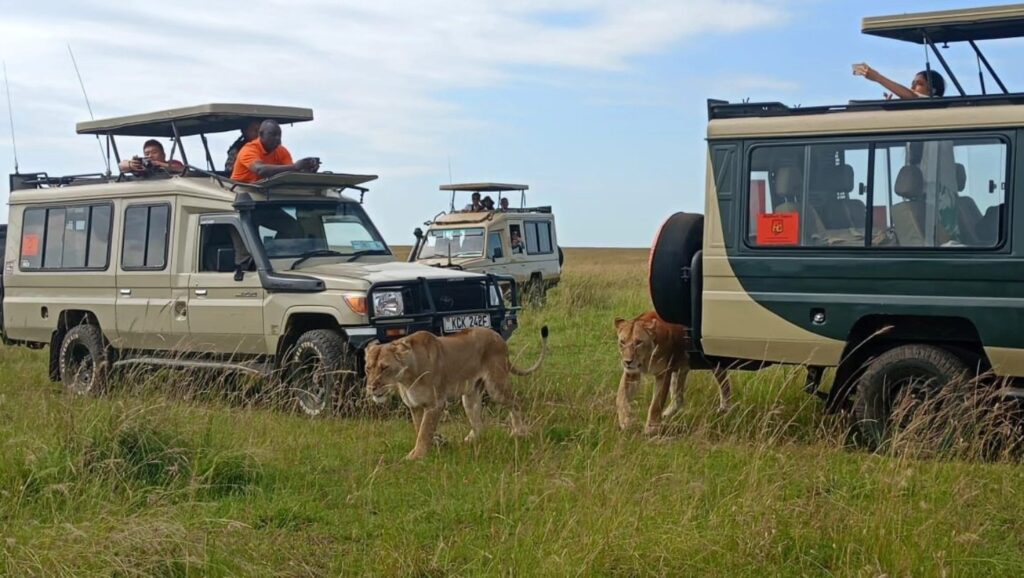
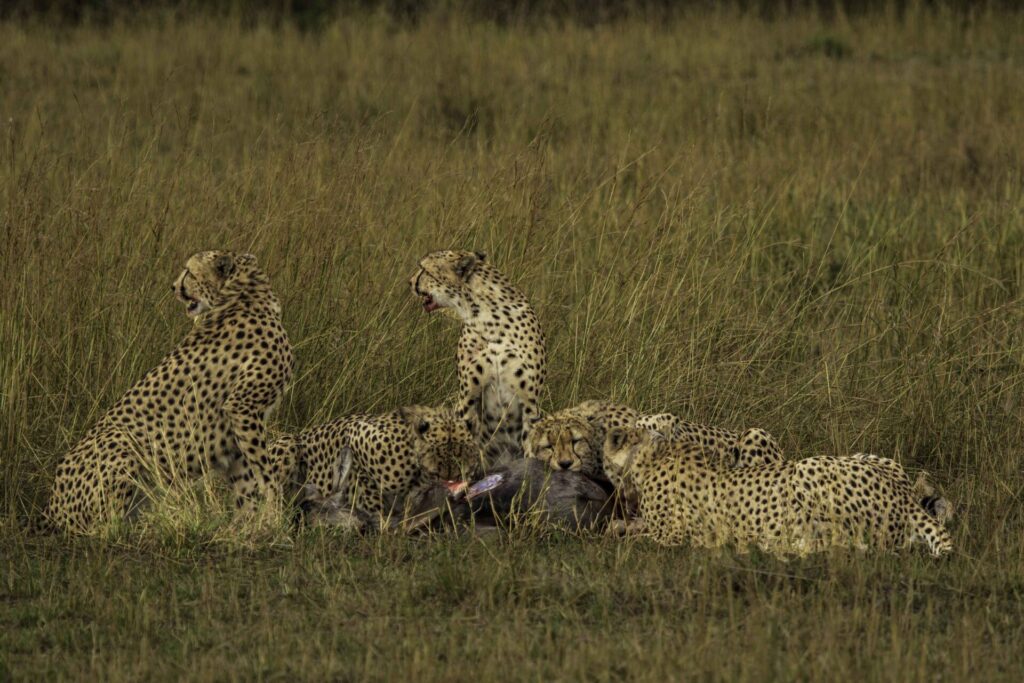
What makes the Mara different from most African parks is the terrain. The grass is short, and the country is open, so you see animals at a distance and can follow a hunt as it develops rather than catching the last ten seconds of it. Lions are the reliable sighting. Cheetahs are common on the open plains east of the Mara River. Leopards are genuinely findable here, which is not true in most parks, particularly along the Talek and Olare Orok riverine woodland.
Getting there: five to six hours by road from Nairobi via Narok, or 45 minutes by light aircraft from Wilson Airport. The road is tarmac until Narok and then rough. If you have a bad back or you are travelling with small children, fly at least one leg.
Reserve or conservancy? This is the decision that most affects your experience, and most operators do not explain it. The national reserve is where the migration crossings happen and where vehicle numbers are highest. At a good sighting in August, you may share it with twenty vehicles.
The surrounding private conservancies (Olare Motorogi, Naboisho, Mara North, Ol Kinyei and others) cap vehicle numbers per sighting, allow off-road driving, night drives and walking safaris, and lease the land directly from Maasai landowners. They cost more per night, and you pay a conservancy fee on top. For most travellers, especially returning ones, the conservancies are worth it.
Amboseli National Park
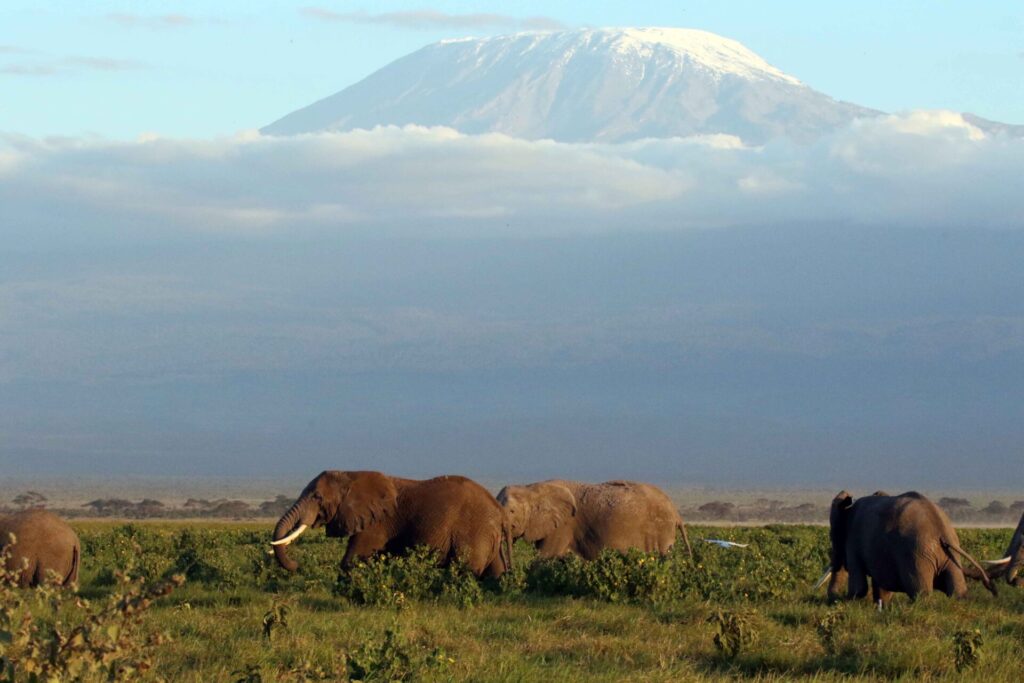
Amboseli is about one thing: elephants with Kilimanjaro behind them. It delivers that better than anywhere on earth, and it is a smaller, more focused park than the Mara.
The honest caveat is the mountain. Kilimanjaro is clear at first light and again in the last hour before sunset. Between roughly 9 am and 4 pm it is usually behind cloud. If Kilimanjaro is why you are going, you need to be out of camp before 6:30 am. Also, you need at least two nights to give yourself two chances. One-night Amboseli stops are how people end up with photographs of a grey sky.
The elephant families here have been studied continuously since 1972, which means the population is unusually habituated and unusually well understood. Amboseli also sits on swamps fed by Kilimanjaro’s snowmelt, so the elephants concentrate there even in the driest months.
Getting there: around four hours by road from Nairobi. It combines naturally with the Mara, or with Tsavo on the way to the coast.
Lake Nakuru National Park
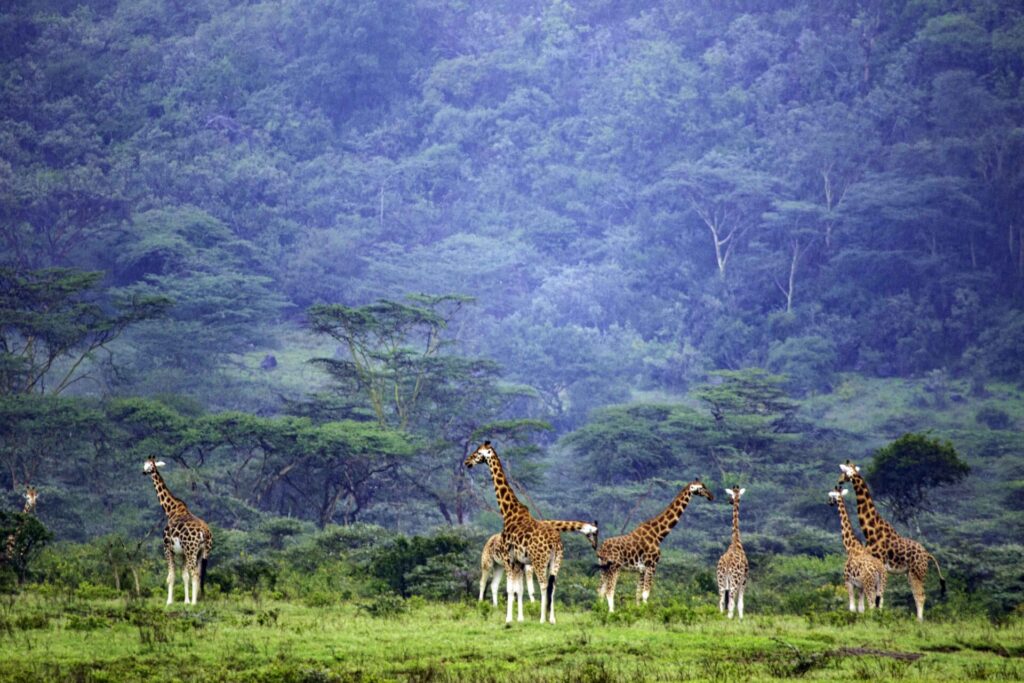
Aside from flamingos, Lake Nakuru National Park has rhinos and buffaloes worth your time. It is a fenced sanctuary and one of the best places in Kenya to see white and black rhino, sometimes in the same game drive. There are also Rothschild’s giraffe, large buffalo herds, and a leopard population in the acacia woodland along the eastern escarpment.
Where it fits: it sits on the Nairobi to Mara road, which makes it an efficient one-night stop rather than a destination in its own right.
Samburu National Reserve
Samburu is the park I send people to when they have already done the Mara and want something that does not look like a wildlife documentary they have seen before. It is dry, red-earthed, rocky country in the north, built around the Ewaso Ng’iro River.
The draw is the species you cannot see further south. Locally these are called the Samburu Special Five animals. Grevy’s zebra in particular is endangered, with most of the world’s remaining population in northern Kenya. Elephants come to the river in large numbers, and leopard sightings along the riverine forest are good.
Getting there: Five to six hours by road from Nairobi, or a short flight. Worth two nights minimum given the distance. Lake Naivasha and Hell’s Gate Naivasha is a freshwater lake where you get out of the vehicle.
Boat trips among hippos, a walk on Crescent Island where there are no predators so you can go on foot among giraffe and zebra, and cycling through Hell’s Gate gorge next door. It breaks up a safari that is otherwise all game drives, and it works well for families with restless children. Two hours from Nairobi.
Ol Pejeta Conservancy
Worth naming separately because of what it holds: the last two northern white rhinos on the planet, a large black rhino population, and a chimpanzee sanctuary. It also runs one of the more transparent community conservation models in Kenya. Three hours from Nairobi on good tarmac.
When to Go: An Honest Month-by-Month Answer
There is no bad month for a Kenya safari. Some months suit different priorities, and the honest framing is a trade- off between wildlife density, crowds, and cost.
| Period | Conditions | Best for | Trade-off |
|---|---|---|---|
| Jan–Feb | Warm, dry, green after the short rains | Value, photography, big cats, low crowds | No river crossings |
| Mar–May | Long rains, heaviest in April | Lowest prices, empty parks, dramatic skies | Muddy tracks, some camps close |
| Jun | Drying out, cool | Shoulder value before the fee jump on 1 July | Herds usually still in Serengeti |
| Jul–Oct | Dry season, cool mornings | Migration, river crossings, peak game viewing | Highest prices, most vehicles, books out a year ahead |
| Nov–Dec | Short rains, brief afternoon showers | Green scenery, migrant birds, fewer visitors | Christmas week is a pricing exception |
What I would actually recommend
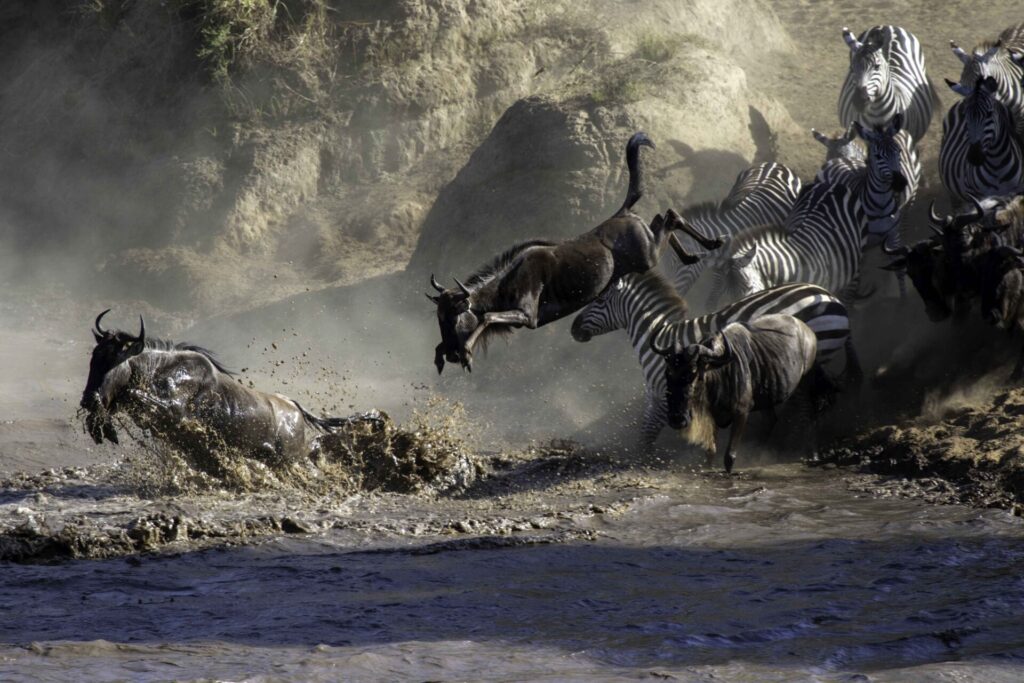
If you want the river crossings: Come between the last week of July and the end of September. Stay a minimum of three nights in the Mara, and accept that you may still not see one. The herds cross when grazing and rainfall tell them to, not on a schedule.
If you want the best experience per shilling: Come in late January or February. Predator activity is excellent, the grass is short after the short rains. The light is superb for photography, the Mara park fee is half what it is in July, and you will have sightings largely to yourself.
If you are flexible and want the parks almost empty: April and May. Yes, it rains, usually in the afternoon and usually not all day. Roads get difficult and a few camps close. But the country is green, the rates are the lowest of the year, and I have had some of my best cat sightings of the last decade in May.
What a Kenya Safari Costs in 2026
Beyond park fees, you are paying for accommodation, a vehicle and guide, fuel, meals, and transfers. Broadly, per person per day sharing a twin room:
Budget camping, shared group vehicle: 150 to 220 USD daily.
Mid-range lodge or tented camp, private vehicle: 300 to 600 USD daily.
Luxury conservancy camp, private vehicle and guide: 800 to 2,500 USD daily.
International flights, the eTA, travel insurance, tips, and drinks sit outside those figures.
Entry Requirements and Health
Electronic Travel Authorisation
Kenya replaced its visa system with an Electronic Travel Authorisation in January 2024. Every visitor needs one, including infants. You apply online before you travel, and airlines will refuse boarding without an approved eTA. Processing usually takes 24 to 72 hours, but apply at least a week out. There is no visa on arrival.
Vaccinations and malaria
A yellow fever certificate is required if you are arriving from or transiting a country with risk of yellow fever transmission. It is not required for travellers coming directly from Europe, North America or most of Asia, though some travellers choose to carry one anyway for onward travel.
Malaria risk exists in the Mara, Amboseli, Tsavo, Samburu and the coast. Nairobi and the central highlands are high enough to be low-risk. Most visitors on a standard safari circuit take prophylaxis, and you should get that prescription from your own doctor or travel clinic rather than from a safari company. Repellent, long sleeves at dusk and the mosquito nets our camps provide do most of the practical work.
Safety
The parks themselves are safe. The realistic risks on a Kenya safari are a vehicle accident on the Narok road and opportunistic theft in Nairobi, not wildlife. Keep valuables out of sight in the city, use booked transfers rather than flagging down vehicles, and stay in the car in the parks unless your guide tells you otherwise.
What You Will Actually See
Kenya offers all five: lion, leopard, elephant, buffalo and rhino. Realistically, on a six-day circuit taking in the Mara, Nakuru
and Amboseli, you will almost certainly see lion, elephant and buffalo. Rhino is close to certain at Nakuru or Ol Pejeta because they are fenced sanctuaries. Leopard is the one that depends on luck, patience and your guide. Anyone promising
you all five is selling, not guiding.
The Great Migration
Roughly 1.3 million wildebeest move through the Serengeti-Mara ecosystem each year, together with around 200,000
zebras and several hundred thousand gazelles. You will see the figure “millions of wildebeest” on a lot of websites. It is not
correct, and the real number is extraordinary enough.
The herds are in the Mara at some point in most years between July and October, then drift back south from late October.
The famous Mara River crossings are the compressed, dramatic part of a year-long cycle, and they are driven by rain and
grazing. In some years crossings start in the last days of June. In others, the herds hold in the Serengeti into August. A herd
can stand on the bank for six hours and then turn around.
What this means practically: give yourself three or four nights in the Mara during crossing season rather than two, stay
near the river, and be out early. Even then, the honest answer is that you are buying a very good chance, not a certainty.
Big cats
The Mara is one of the strongest big cat destinations in Africa. Lion prides here are large and well known to guides.
Cheetahs favour the open eastern plains, and because the Mara conservancies allow off-road driving, that is where you get
the close, unobstructed cheetah photography people come for. Leopards hold territory along the riverine forest and are most often found at first light and in the last hour of the day.
What a Day on Safari Looks Like
Wake-up is around 5:30 am with coffee brought to your tent. You are in the vehicle by 6:15 and at the gate or in the conservancy as light comes up, because that is when predators are still moving, and the temperature is low enough for
them to hunt.
You are out three to four hours, then back to camp for a late breakfast. The middle of the day is genuinely quiet in the bush, so that time is for resting, swimming, or a siesta while the heat passes. The second drive goes out around 4 pm and runs until the gate closes at 6, or later in the conservancies where night drives are allowed. Dinner, a fire, and an early night.
Alternatives on a longer itinerary include full-day drives with a picnic lunch, which is how you follow a migration herd properly, guided walks, balloon flights over the Mara, and community visits.
How Many Days Do You Need?
The mistake almost every first-time itinerary makes is too many parks. Driving time between Kenyan parks is substantial,
and a day spent in transit is a day not spent watching animals.
3 days: one destination only, realistically the Mara, flying in and out. Two nights in camp.
5 days: two destinations. Mara plus Amboseli, or Mara plus Nakuru and Naivasha.
7–8 days: the sweet spot. Three destinations at a human pace, with a full day in the Mara rather than a half.
10+ days: add Samburu, or extend to Diani or Watamu on the coast.
My standing advice: fewer parks, more nights in each. Three nights in one place will give you better wildlife and better rest
than one night in each of three.
What to Pack
- Neutral colours. Khaki, olive, brown, grey. Avoid bright white, which shows in the bush, and dark blue and black, which attract tsetse fly in Tsavo and parts of the Mara.
- A genuinely warm fleece or jacket. The Mara at 6 am in July and August is cold, and open-roof vehicles at speed are colder. This is the single most commonly underpacked item.
- Binoculars, one pair per person. Sharing a pair ruins sightings.
- A telephoto lens of at least 300mm if photography matters to you, plus twice as many memory cards as you think you
- need.
- Sunscreen, wide-brimmed hat, sunglasses. You are on the equator at 1,500m.
- Soft duffel bag, not a hard suitcase, if any leg is by light aircraft. Luggage limits on Mara flights are typically 15kg in soft bags.
- Insect repellent with DEET, and a lightweight rain shell from March to May and November to December.
Kenya With Children
Kenya works well for families, with two adjustments. Keep road transfers short, which usually means flying at least one leg,
and choose properties that have a pool and space to run. Long drives are where family safaris fall apart.
Most camps set a minimum age for game drives, commonly six or eight years, and some conservancies have their own limits. Several camps have family tents and dedicated children’s guides who run bush-skills activities between drives. A
private vehicle rather than a shared one is close to essential with young children, because it means you can turn back when
you need to.
Kenya Only, or Kenya and Tanzania?
They share the same ecosystem, but they are not the same experience. Kenya gives you higher wildlife density per hour of
driving, a much shorter and cheaper circuit, and easier logistics. Tanzania gives you the scale of the Serengeti, Ngorongoro
Crater, and the calving season in the southern plains from January to March, which Kenya does not have.
If you have ten days or fewer, do Kenya properly rather than both badly. Crossing at Isebania or Namanga eats the better
part of two days, and Tanzanian park fees are higher. If you have fourteen days, combining them is genuinely rewarding.
Frequently Asked Questions
- What is the best month for a Kenya safari?
For the migration, late July to early October. For value and excellent general game viewing, January and
February. There is no month in which the Mara is not worth visiting.
2. How much does a Kenya safari cost per day?
Park fees alone are USD 80 to 200 per adult per day depending on the park and season. A full mid-range
safari including accommodation, vehicle, guide and meals typically runs USD 150 to 1,200 per person per day.
3. Do I need a visa for Kenya?
You need an Electronic Travel Authorisation, applied for online before departure. It replaced the visa
system in January 2024, and there is no visa on arrival.
4. Is it safe to go on safari in Kenya?
Yes. The parks are safe when you follow your guide’s instructions. Normal city precautions apply in Nairobi.
5. Will I definitely see the Big Five?
Lion, elephant, and buffalo are near certain on a standard circuit. Rhino is near certain if your itinerary
includes Lake Nakuru or Ol Pejeta. Leopard depends on luck and time in the field.
6. Can I see the wildebeest migration in January?
Not in Kenya. In January the herds are in the southern Serengeti in Tanzania for the calving season. In
Kenya, January is a green-season month with excellent resident wildlife, which is a different and very good
thing.
7. How far is the Masai Mara from Nairobi?
Roughly 270km, which is five to six hours by road via Narok, or a 45-minute flight from Wilson Airport.
Plan Your Safari
We, Meektrails Safaris, are a family-run Kenyan operator. I guide, my team guides, and we build each itinerary around what you actually want to see rather than around a fixed package. If you tell us your dates, your budget, and whether the migration matters to you, we will come back with a real itinerary and a real price.
Get a free safari quote or message us on WhatsApp via +254721212005.