
Exceptional Kenya safari photography relies on three distinct elements: wildlife, dramatic landscapes, and reliably good light. Kenya delivers all in spades, compressing a continent’s worth of epic wildlife action into a few accessible parks. One moment you are framing lion prides moving stealthily through the golden grass of the Mara. Next, you’re capturing pink clouds of flamingos rising over a Rift Valley lake. Getting great images, though, takes more than luck. Here are Kenya safari photography tips to help you excel.
Choose the Right Kenya Safari Photography Destination
Not all parks offer the same Kenya wildlife photography opportunities. Matching your destination to the images you want is the first and most important decision you’ll make.
Masai Mara for Big Cats and the Great Migration
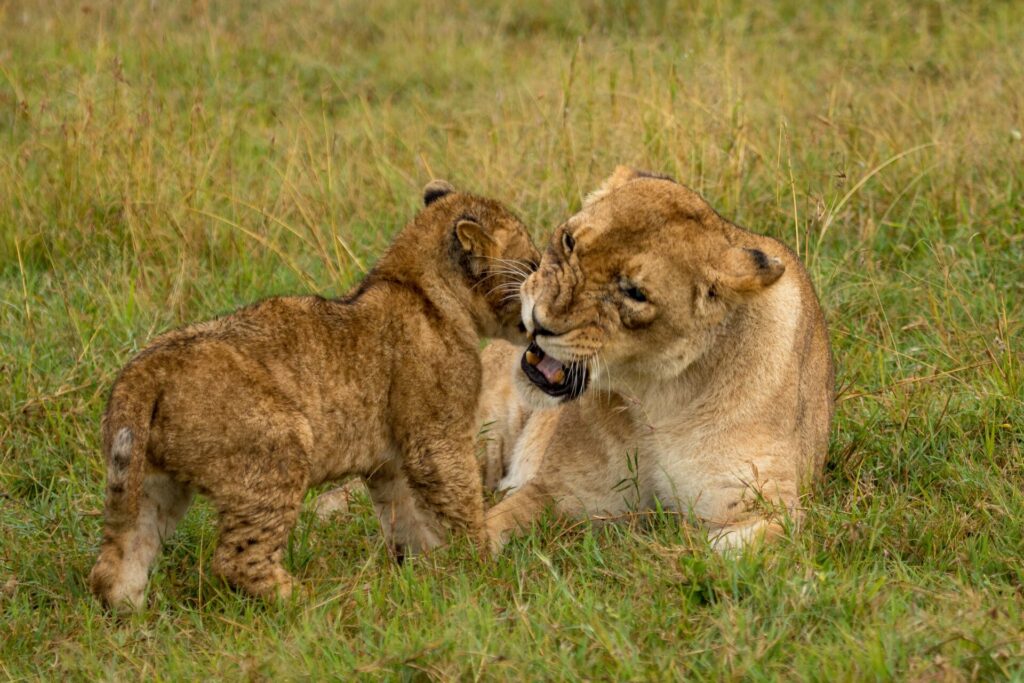
The Mara is Kenya’s flagship reserve, famous for large numbers of lions, cheetahs, and leopards. It’s also home to the Great Wildebeest Migration, when millions of wildebeest and zebras brave the crocodile-filled Mara River. Besides, open savannah grasslands make it easier to get clean, uncluttered backgrounds behind your subjects.
Amboseli National Park for Elephants and Mount Kilimanjaro
Amboseli is best known for its legendary elephant herds roaming the dusty plains. You can capture these silhouetted herds framed beautifully against the towering, snow-capped backdrop of Mount Kilimanjaro. Early morning is prime time here, when the mountain is most likely to be cloud-free, and the light is soft.
Samburu National Reserve for Unique Northern Species
North of the equator, Samburu’s arid landscape hosts species you won’t find in the southern parks. These rare species include Grevy’s zebra, reticulated giraffe, gerenuk, and Somali ostrich. Samburu is a great choice for wildlife photography in Kenya that has less crowded scenes and a different visual palette.
Lake Nakuru National Park for Birds, Rhinos, and Scenic Landscapes
Lake Nakuru is a sanctuary for black and white rhinos that’s sometimes carpeted with flamingos and pelicans. The forested hills and shimmering lakes offer an entirely different canvas for Kenya wildlife photography. They break the mold of classic open-plain safari shots, framing wildlife with lush greenery and deep reflections.
How the Destination Affects the Type of Wildlife Photography In Kenya
Your choice of park shapes your entire Kenya wildlife photography experience and results. It affects the species you’ll encounter, the backdrops, light quality, and the shooting distances available.
For instance, grassland reserves like the Mara suit fast action and clean silhouettes. Conversely, Amboseli rewards patience for that perfect mountain backdrop in your Kenya safari photography.
Therefore, matching your destination to your photographic goals is the foundation of a successful photography safari.
Make the Most of Early Morning and Evening Light
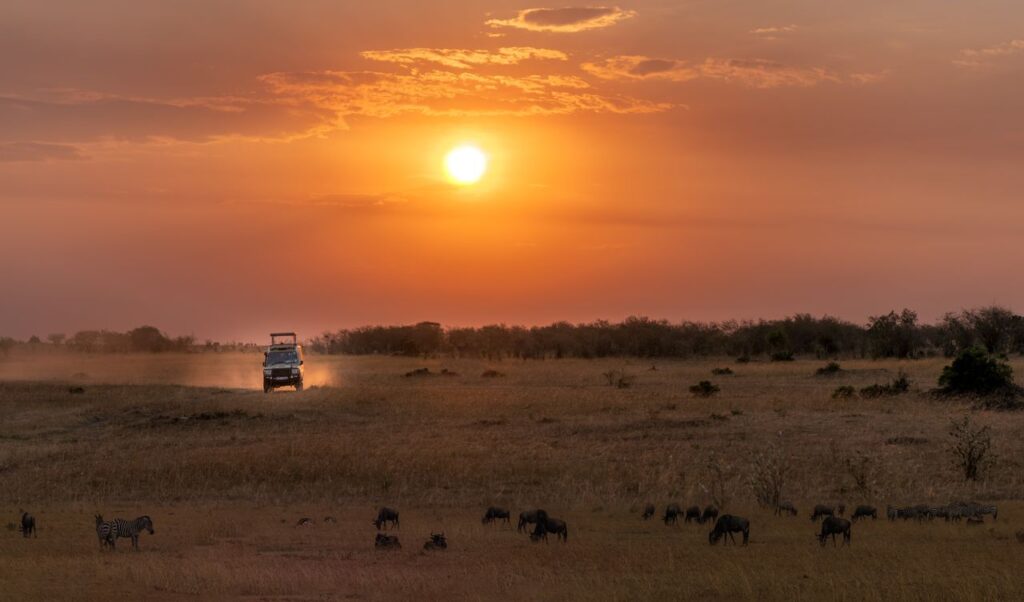
Photographers call the hours just after sunrise and before sunset the “golden hours.” Nowhere is that phrase more literal than in Kenya safari photography. Low-angle sunlight wraps around animals in a warm glow and softens harsh shadows. It also adds a golden rim to fur, feathers, and dust kicked up by a running herd.
Besides, it’s during these periods that animals are most active. Predators hunt in the cool hours, and herbivores graze before the midday heat sends everyone into the shade. Therefore, to get the most out of wildlife photography in Kenya, plan your game drives around these windows.
Fortunately, most camps offer early departures before sunrise and a second drive that returns after sunset. This routine works well for Kenya safari photography because both animal behavior and light quality peak at this time.
During the harsh midday sun, colors flatten, and shadows turn stark. Use that downtime to rest, review your shots, and recharge batteries. If you do shoot midday, look for animals resting in shade or near water. For these shots, consider black-and-white conversions that turn strong contrast into a stylistic strength rather than a weakness.
Backlighting is another golden-hour trick worth adding to your Kenya safari photography tips. It involves positioning the sun behind your subject. The trick creates striking silhouettes of elephants, giraffes, or acacia trees against a fiery sky.
Use Your Safari Jeep to Your Advantage
When it comes to planning for successful wildlife photography in Kenya, your vehicle isn’t just transport. It’s your mobile hide, tripod, and photography partner for the entire trip. Here are Kenya safari photography tips to turn your jeep into a handy companion.
Positioning the Vehicle for Better Photographs
Ask your driver to approach subjects at an angle rather than head-on. This trick gives you a three-quarter view of the animal rather than framing a flat frontal shot. They can circle slightly to place the sun behind or beside you. This avoids having the sun behind the subject, therefore producing better-lit, more dimensional images.
For predators or herds on the move, position the vehicle slightly ahead of their path, without blocking it. This lets you capture the herds moving toward or across your frame rather than shooting from behind.
Using the Vehicle as a Stable Shooting Platform
Ask your guide to turn off the vehicle’s engine to make it stable. Consider draping bean bags over the window frame or the roof hatch to make a lightweight stabilizer for long lenses. This tip works better than a traditional tripod in tight vehicle quarters.
Brace your elbows against your body and the vehicle frame. Ensure you use a faster shutter speed than normal circumstances. That’s because even small vibrations are magnified at long focal lengths.
Communicate with Your Safari Guide
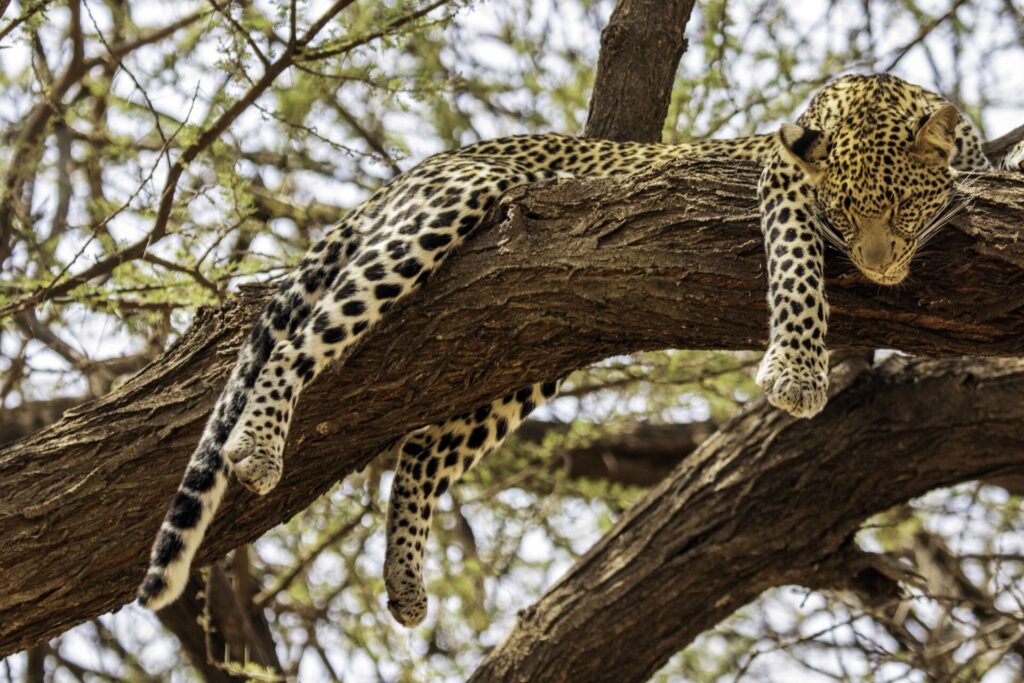
Experienced guides are skilled wildlife spotters and can be among your greatest photographic assets if you communicate clearly. Let your guide know what you’re looking for in a good time. It could be a hunting scene, portrait shots, birds in flight, or a specific species. Tell them your ideal shooting angle and ask if they can reposition when a better one is available.
Good guides will also radio other vehicles about sightings. They know how to approach animals slowly and quietly, minimizing stress on wildlife while maximizing your photo opportunities. Consequently, a communicative relationship with your guide makes the difference between good Kenya wildlife photography and an extraordinary one.
Kenya Safari Photography Tips
A successful Kenya safari photography experience boils down to you making the right choices. Choose the right park for your goals, plan your schedule around golden light, and use your vehicle smartly. Meektrails Safaris has Kenya safari photography packages.